

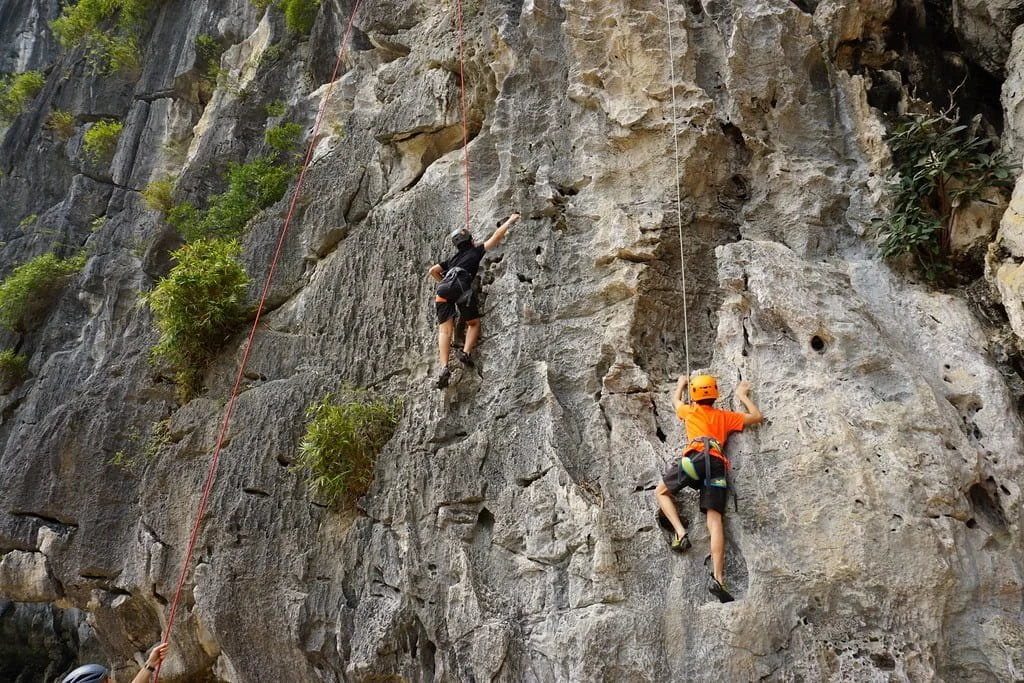
Adventure education teaches through real physical challenge: a demanding climb, a multi-day paddle, or a night in a tent students pitched themselves. What separates it from a holiday with activities is design. The challenge is chosen, sequenced and supervised so students are pushed into genuine discomfort while real hazards stay controlled. Every experience is then talked through until it becomes learning. This article covers what adventure education develops in students, how managed challenge works in practice, who should lead the activities, and which destinations suit an adventure-focused school trip.
What Is Adventure Education?
Adventure education is a branch of experiential learning that uses outdoor activities with a real sense of risk, such as rock climbing, kayaking, trekking or camping, to build personal and social skills. The activity is the vehicle. The learning comes from how students respond to it and how they make sense of it afterward.
The important word is sense. A student on a top-roped climb feels the height completely, but the rope, the anchor and the instructor at the base keep the actual risks small. That gap between how a challenge feels and how dangerous it really is gives adventure education its power. Our CEO, Haena Kim, described the aim in her interview with Leading Your International School on outdoor education: to push students outside their comfort zone "and cement that being uncomfortable is okay."
What Does Adventure Education Develop in Students?
Adventure education develops the ability to work through fear, confidence that transfers back to school, practical teamwork and leadership skills, and a more accurate sense of what a student can actually do. Done well, it also builds outdoor competence and environmental responsibility.
A widely cited meta-analysis of adventure education by Hattie, Marsh, Neill and Richards, published in 1997 and drawing on 96 studies, found positive effects on outcomes including leadership and self-concept. Unlike some other educational programs, the gains did not fade once students went home: they continued to grow between the end of the program and follow-up. The same review found that longer programs and older participants tended to show larger effects, which is one reason sequencing across school years matters.
On our programs, that development shows up in four ways:
Working through fear. Students complete something they were sure they couldn't do, and they take that confidence back to school.
Practical leadership. Team tasks like shelter-building and fire-starting need someone to organize the group, make decisions and help teammates, and different students step forward to lead.
Outdoor competence. Students learn and use navigation, first aid and Leave No Trace skills on the trail.
Responsibility for a place. As a partner of Leave No Trace, we build minimal-impact practice into camping and expedition days rather than teaching it as a separate lesson.
What Does "Managed Challenge" Mean in Practice?
Managed challenge means the difficulty of each activity is deliberately set so students feel stretched, while the real hazards are identified, reduced and supervised. Risk is not removed. It is assessed, controlled and matched to the group.
At Beyond Classrooms, that happens in three layers.
Before departure. Every program goes through formal activity, location and program risk assessments. Activity partners pass safety and compliance checks before we approve them, and we review each student's medical, dietary and relevant personal information so leaders can prepare individual safety responses.
On the ground. Each activity day starts with a safety briefing. We provide about one leader for every ten students, not counting school teachers and chaperones. Every program also has a designated on-ground decision-maker, a clear escalation path and a 24/7 emergency line. The full framework is on our school trip safety page.
In the moment. The third layer is judgment, and it is the one parents and teachers rarely see. Risk assessments and briefings can plan the day, but they can't tell a leader what one student needs at a particular moment. Leaders watch how each student is coping, then decide when to step in, when to hold back and when to stop.
For example, when a student freezes halfway up a climbing wall, the instinct is to shout encouragement. Trained leaders often do the opposite and stay quiet. The student is already processing fatigue, height and fear, and a calm wall gives them room to think. Many recover and finish on their own. If they truly can't continue, they are lowered safely.

Every activity day starts with a safety briefing, so students know the plan before the challenge begins.
How Is Challenge Sequenced Across a Program?
Challenge is sequenced so each experience prepares students for the next. Low-stakes activities build skills and trust first, the most demanding day comes once the group is ready for it, and reflection is built in between. The order is as deliberate as the activities themselves.
Andy van Riet, our Co-Head of Operations, describes the approach as a mix of two mindsets. "The curriculum designer side comes from the fact that many of our project managers and program designers have teaching backgrounds," he says. They think the way teachers plan lessons: how experiences build on one another, when to introduce a challenge, and when to leave room for reflection. The second mindset is a museum curator's, telling the story of a place from several perspectives so students don't leave with a single, simplified view.
Our six-day Manali Outdoor Adventure program in the Indian Himalayas shows both at work:
Day 1: A briefing on Manali's cultural and environmental significance, and students set personal goals for the trip.
Day 2: An orienteering challenge through Manali with community guides. Low physical risk, plenty of problem-solving, and teams start to form.
Day 3: Rock climbing with local instructors in the morning, then ziplining, followed by an evening conservation workshop and campfire reflection.
Day 4: A guided hike covering Leave No Trace and first aid, advanced hiking and mountain rescue in the afternoon, then a night camping.
Day 5: The hike back, practicing mountain rescue on the way, then biking.
Day 6: A visit to Naggar's Kathkunni architecture and a workshop on sustainable building in the mountains, then a final group reflection.
The curator's thread runs through the adventure days too. Ziplining comes with a discussion of what adventure tourism does to a mountain environment, and the climbing session looks at the region's rock formations as well as the technique.
Sequencing also works across years, not only within one trip. Haena describes a progression that might start with hotel stays for younger students, move to camping as they grow, and build toward ambitious expeditions such as the Duke of Edinburgh's International Award Adventurous Journey.
Andy is clear about the limit of all this design. "The aim isn't to be too explicit or prescriptive about what students should take away," he says. The arrangement of experiences gives students the best chance of making connections and finding something meaningful on their own.

Orienteering on day two asks a lot of the group and little of the body, which is why it comes before the climb.
Who Leads the Activities, and What Qualifications Should They Hold?
Technical activities should be led by instructors qualified in that specific activity who also hold wilderness-level first aid, and every trip leader should hold first aid and safeguarding training.
Every Beyond Classrooms trip leader is first aid certified and holds safeguarding certification under a signed code of conduct. Instructors on our adventure education programs are also certified in Wilderness Advanced First Aid (WAFA). Emergency protocols are drilled at least twice a year and licenses are renewed annually. Our Head of Safety and one of our most experienced instructors, Jack Qin, works closely with Wilderness Medical Associates International and holds China's national emergency rescuer credential.
Many of our activity leaders hold qualifications in climbing, kayaking, or sailing. Specialist sessions, such as climbing in Manali, run with local instructors from partners that have passed our vendor audits.
"What matters is the ability to connect with students, communicate clearly, motivate them, and keep safety at the forefront throughout the experience," Andy says.
If you are comparing providers, these questions separate a qualified team from a well-marketed one:
What qualification does the lead instructor hold for this specific activity?
What level of first aid do trip leaders hold, and how often is it renewed?
What is the leader-to-student ratio, not counting your own teachers?
Who makes decisions on the ground in an emergency, and how quickly does the school hear about it?
How are third-party activity providers vetted before your students use them?
What Separates a Designed Program From an Activity List?
An activity list tells you what students will do. A designed program tells you why each activity sits where it does, what students need to be ready for it, and how they will make sense of it afterward. Two itineraries can share the same climb and the same campsite and still produce very different trips.
| Activity list | Designed program | |
|---|---|---|
| Starting point | Available activities | Learning goals for the group |
| Order of activities | Whatever fits the schedule | Easier activities first, building skills and trust before the hardest day |
| Difficulty | Same for everyone | Calibrated to the group, with options to step back |
| Place | Backdrop for the activity | Part of the story: ecology, culture, history |
| Leaders | Run the activity | Facilitate, observe and debrief |
| Reflection | Optional, if time allows | Built into evenings and after the trip |
| Safety | Provider's standard terms | Program-specific risk assessment and vetted partners |
The difference shows most clearly in what happens after the activity. Students on an activity list may come home with a great story about a climb. Students on a designed program have also reflected on how they handled it and connected it to what they already know, so they come back knowing what they learned about themselves and where they can use it at school. Our programs end with a structured debrief and learning consolidation with the school, so teachers can keep building on that growth in class.
Where Do Students Make Their Biggest Breakthroughs?
There is no single activity that produces the biggest breakthrough. It depends on what each student brings: their background, their confidence, and whatever personal challenges they are working through. "The same activity can mean very different things to different students," Andy says.
Rock climbing often produces the most visible kind, though. A student works through fear on the wall, reaches a point they didn't think they could, and carries that confidence back into class.
The quieter breakthroughs often come from hands-on team tasks such as shelter-building and fire-starting. Students who don't always stand out academically can shine here, bringing practical skills, helping teammates and taking on leadership roles. When that happens, Andy says, "it can change how their classmates and teachers see them, but also how they see themselves."
Sometimes the breakthrough comes from a leader deciding not to help. On one hike, Haena noticed a petite student carrying a 25 kg backpack. The instinct was to take some of the weight. Judging that the limit was more mental than physical, she let the student carry on. The student finished and surprised herself, showing confidence and pride in her accomplishment.
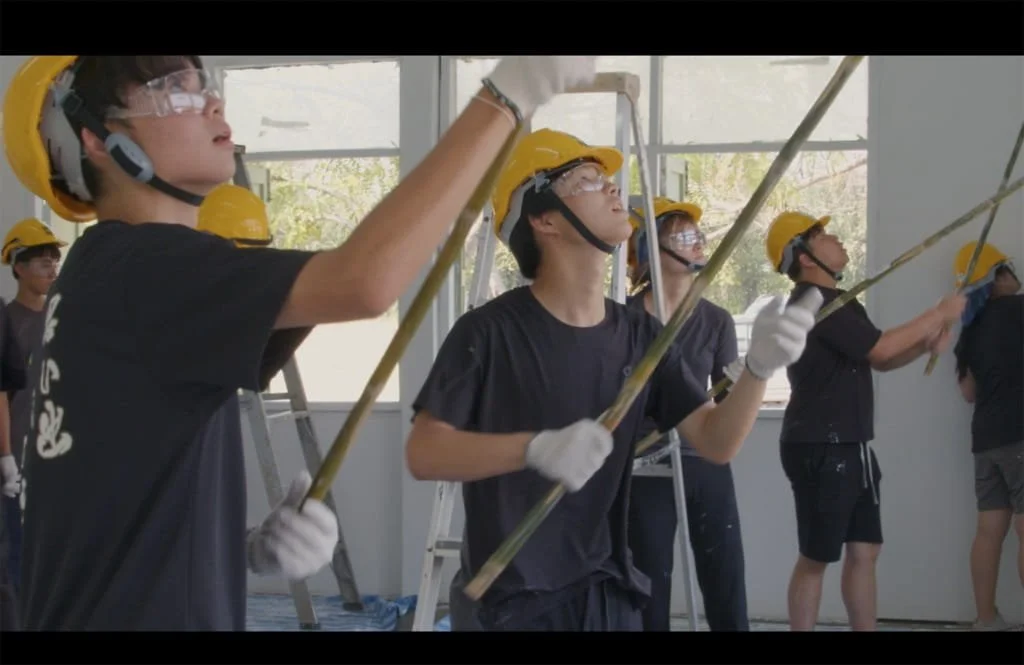
Practical team tasks give students who rarely lead in class a chance to step forward.
Which Destinations Suit an Adventure-Focused School Trip?
The best destinations for adventure-focused school trips combine varied terrain within short transfer times, established activity partners, and a local story worth telling alongside the challenge. Our current adventure programs span rivers, mountains, coastlines and volcanoes.
| Destination | Program | What students do |
|---|---|---|
| Thac Ba, Vietnam | Expedition Kayaking | Learn paddling, safety and map-and-compass navigation, then complete a multi-day kayaking expedition through karst landscapes, camping on remote islands. |
| Da Nang and Hoi An, Vietnam | Coastal Exploration | Hike the Marble Mountains and Son Tra Peninsula, kayak, surf and cycle, and join a coastal clean-up. |
| Manali, India | Outdoor Adventure | Navigate Manali on an orienteering challenge, climb with local instructors, then hike and camp in the Himalayas while practicing mountain rescue skills. |
| Bali, Indonesia | Bali Adventure | Trek up Mount Batur for sunrise, raft white water on the Ayung River, and join a beach clean-up. |
You can see the full range of outdoor adventure programs in Vietnam, along with our Manali outdoor adventure itinerary and school trips to Bali. We also run adventure-focused programs in Nepal, Taiwan, South Korea and Mongolia's Gobi Desert.
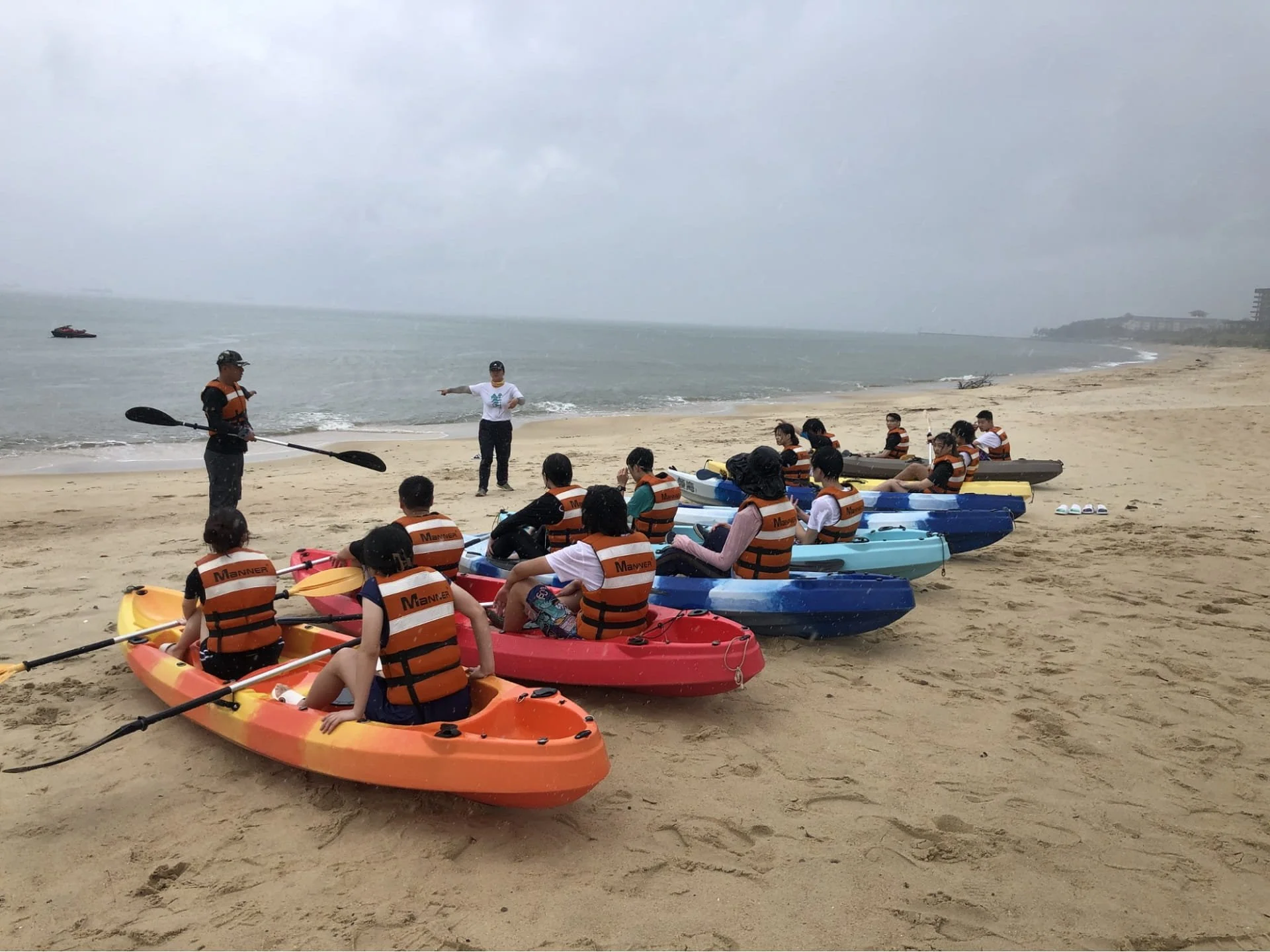
On the Thac Ba expedition, students paddle between campsites and practice Leave No Trace on every island they stay on.
Adventure education gives students real challenge in a setting built to keep them safe while they work through it. The trips help students push past fear, lead and support others, build outdoor skills, and take responsibility for the places they visit. A kayaking expedition at Thac Ba, a Himalayan hike from Manali and a sunrise trek up Mount Batur each offer a different route to that growth, with the sequencing, supervision and reflection that make the learning last.
Every program can be adjusted in length, activities and difficulty to suit the age group and the school's learning goals. Talk to our team at Beyond Classrooms about building the right level of challenge for your students.