

Designing Reflection Frameworks That Deepen Learning After Educational Travel
Educational travel can be life-changing. Students enter unknown settings, encounter diverse viewpoints, and interact with concepts in methods that a classroom by itself cannot reproduce. However, without organized reflection, even the most impactful experience can diminish into memory instead of transforming into sustainable learning.
Schools frequently dedicate considerable time and resources to organizing impactful trips, but much less focus is placed on what occurs once students come back. Reflection goes beyond just summarizing. It is the method that enables learners to link experiences to previous knowledge, question beliefs, and utilize insights for future learning. When crafted purposefully, reflection frameworks transform travel into ongoing academic and personal development.
Here, we present some practical frameworks that schools can implement to create organized post-trip reflection systems. We investigate ways to incorporate reflection into assessment, connect it with curriculum objectives, and weave it throughout the entire journey, ensuring that educational travel fosters profound, lasting learning instead of being a singular experience.

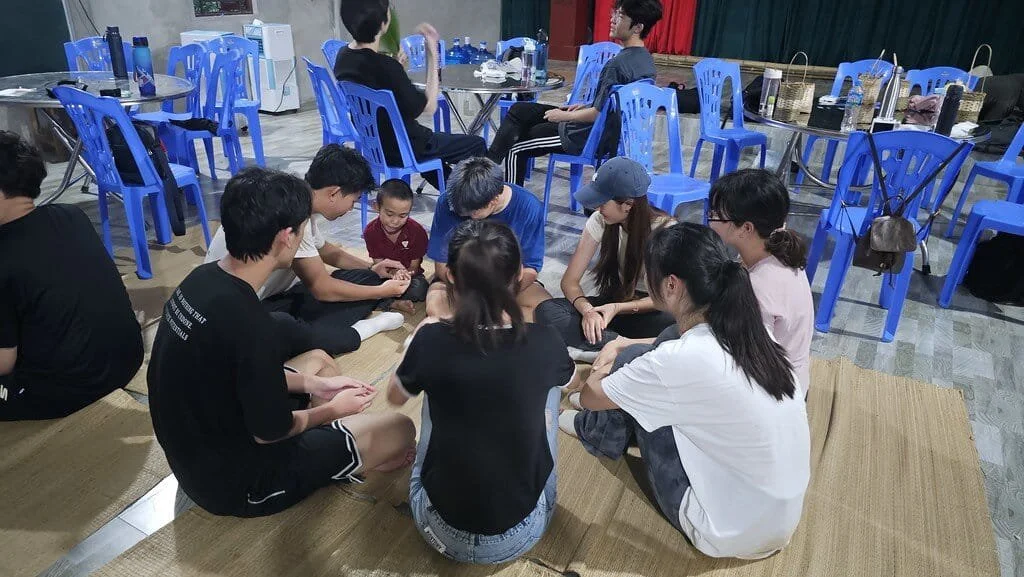
Guided discussion on site transforms experience into intentional, structured learning.
Why Reflection Determines Long-Term Impact
Experience Versus Processed Learning
A well-designed educational trip generates intensity. Learners navigate unfamiliar environments, encounter real-world complexity, and respond emotionally as well as intellectually. However, intensity alone does not produce durable learning. What determines long-term impact is whether that experience is processed.
Research in experiential education consistently highlights a critical distinction between activity and reflection. Experience provides raw material. Reflection shapes meaning. When learners are guided to examine what they observed, how their thinking shifted, and where tensions or contradictions emerged, they begin to construct transferable understanding. Without this step, insights remain isolated and often disconnected from academic frameworks.
In practical terms, processed learning requires structure. Schools can:
Design focused reflection questions that push beyond description and into analysis
Prompt learners to identify moments of discomfort or surprise and unpack why they mattered
Require connections to prior coursework, not just personal reactions
Encourage learners to articulate how the experience may influence future choices or perspectives
The Risk of “One-Off” Trips
Many schools unintentionally treat educational travel as an enrichment event rather than an integrated learning sequence. The result is what might be called the “one-off” trip, where excitement peaks during travel but dissipates quickly upon return to routine schedules and assessment pressures.
When reflection is absent or superficial, several patterns tend to emerge:
Learners recount activities but struggle to explain why they mattered
Teachers find it difficult to reference the trip meaningfully in subsequent lessons
Senior leaders question the academic value of the investment
Parents see the experience as valuable socially, but unclear academically
Structured reflection protects against this erosion. It anchors the experience within curriculum goals and ensures that teachers can revisit trip themes in later units. Most importantly, it signals to learners that the trip was not a break from learning but a different mode of it.
Structured Reflection Models Schools Can Use
Schools do not need to reinvent reflection from scratch. What they need is clarity and consistency. Effective post-trip reflection systems are structured enough to guide thinking, yet flexible enough to adapt across age groups and subject areas. Below are three models that can be embedded into existing school systems without overwhelming teachers or learners.

Structured journaling moves learners from description toward deeper analysis and application.
Guided Journaling Prompts
Unguided journaling often produces surface-level summaries. Learners describe what they did, where they went, and how they felt. While this has value, it rarely deepens understanding.
A more effective approach uses tiered prompts that move from description to analysis and then to application. For example:
What specific moment challenged your assumptions, and why?
How does this experience connect to a concept studied in class?
What evidence did you observe that supports or complicates a theory or theme from the curriculum?
How might this experience influence your future academic or personal decisions?
Schools may offer these prompts in printed field booklets, online learning platforms, or organized reflection sessions. The crucial aspect is deliberate ordering. Prompts ought to necessitate that learners analyze, assess, and integrate instead of merely memorizing.
Peer Discussion and Seminar Formats
Reflection becomes more rigorous when learners articulate their thinking in dialogue with others. Structured discussion formats, such as Socratic seminars or facilitated debrief circles, allow learners to test ideas, challenge interpretations, and refine their understanding.
To avoid unfocused conversation, schools can:
Establish a central inquiry question linked to the trip theme
Assign learners specific roles such as evidence-seeker or perspective-challenger
Require references to field notes, interviews, or observations during discussion
Capture key insights on shared documents for later assessment integration
Digital Portfolios and Evidence Capture
Reflection gains depth when learners curate tangible evidence from the trip. Digital portfolios allow them to combine photographs, interview transcripts, data collection, sketches, and written analysis into a coherent learning narrative.

Digital portfolios turn trip artefacts into visible evidence of intellectual growth.
Rather than uploading images without commentary, learners should be required to annotate artifacts. Each artifact can be linked to:
A curriculum objective
A key theme or inquiry question
A personal insight or intellectual shift
Over time, these portfolios become powerful records of growth. They provide teachers with assessment evidence and give learners a visible trajectory of how their thinking evolved.
Connecting Reflection to Assessment
Reflection gains much greater strength when it is integrated into the academic framework rather than treated as an optional extra. For educational travel to be regarded seriously by students, families, and senior leadership, it must have a clear connection to curriculum goals and assessment standards.

Students during one of our Korea trips taking notes for reflection and study
Linking Trip Themes to Curriculum Objectives
Before departure, teachers should identify which curriculum strands the trip is designed to strengthen. This alignment should not be broad or symbolic. It should be explicit and visible to learners.
For example, a sustainability-focused program might connect directly to:
Systems thinking in environmental science
Ethical decision-making in humanities
Data analysis skills in mathematics
Persuasive communication in language arts
Once these links are defined, reflection tasks can require learners to reference specific standards or competencies. Instead of asking, “What did you learn?”, teachers can ask, “How did this experience deepen your understanding of human-environment interaction as defined in Unit 3?” This level of specificity ensures that reflection strengthens subject mastery rather than sitting outside it.
Rubrics for Reflective Learning
Assessment of reflection should not reward eloquence alone. It should evaluate depth of thinking, evidence use, and conceptual connection. Clear rubrics help both learners and teachers understand what high-quality reflection looks like.

Reflection gains academic weight when learners present evidence-based insights connected to curriculum goals.
A well-designed rubric might assess:
Depth of analysis beyond description
Use of concrete evidence from the trip
Connections to curriculum concepts
Willingness to examine assumptions or contradictions
Clarity of reasoning
Importantly, rubrics should be shared before the trip begins. When learners understand expectations in advance, reflection becomes purposeful rather than reactive.
Some schools choose to include reflection as a graded component within a larger unit, while others embed it within portfolio-based assessment models. Either approach can work, provided expectations are transparent and aligned with learning goals.
When reflection is linked to assessment thoughtfully, it reinforces academic credibility. It signals that educational travel is not a pause in learning but a rigorous extension of it.
Building Reflection Into the Trip Timeline
Reflection is most effective when it is distributed across the entire learning journey rather than concentrated in a single post-trip assignment. Schools that see sustained impact typically design reflection as a sequence, beginning before departure and extending well after return. This approach creates continuity and helps learners situate experience within a broader intellectual arc.
Pre-Departure Framing
Deep reflection begins before the first flight or site visit. Pre-departure sessions should clarify the central inquiry, introduce key concepts, and surface learners’ assumptions.
Schools can structure this phase by:
Asking learners to articulate their current understanding of the trip’s core theme
Identifying personal learning goals tied to curriculum objectives
Mapping anticipated challenges or tensions related to the destination context
Establishing essential questions that will guide on-site observation
This framing step does more than prepare logistics. It primes learners to observe with intention. When they arrive on site, they are not simply reacting. They are testing ideas, gathering evidence, and comparing theory with reality.
On-Site Debrief Moments
Reflection during the trip does not require lengthy workshops. Short, well-facilitated debrief moments can significantly strengthen learning retention.

Central inquiry questions anchor reflection to curriculum objectives.
Effective on-site reflection often includes:
End-of-day small group discussions focused on one central question
Rapid written reflections connecting a specific encounter to a curriculum concept
Paired conversations analyzing a moment of discomfort or surprise
Structured observation check-ins that revisit the pre-departure inquiry
Reflection should occur while experiences are still vivid, but it must remain focused. Teachers can rotate facilitation roles or assign learners responsibility for leading discussions, which builds ownership and reinforces accountability.
These touchpoints ensure that insights are not postponed until memory fades. They also create a habit of analytical thinking throughout the trip rather than a single reflective exercise at the end.
Post-Return Integration
The most overlooked stage of reflection is integration back into regular coursework. Without this step, even thoughtful debrief sessions may lose momentum once academic schedules resume.
Post-return reflection should move beyond emotional summaries and ask learners to:
Revisit their pre-departure assumptions and assess how they shifted
Apply trip insights to new case studies or classroom projects
Present evidence-based reflections to peers or school leadership
Identify future inquiries sparked by the experience
Some schools schedule a formal “re-entry seminar” within two weeks of return. Others embed trip themes into the next unit assessment. The key is visible continuity. When teachers reference the trip in subsequent lessons, learners recognize that the experience has academic weight.
Turning Experience Into Enduring Understanding
Educational travel can open perspectives, challenge beliefs, and inspire curiosity. Yet without intentional reflection, these outcomes remain fragile. Schools that design structured reflection systems see a different result. Learners connect lived experience to disciplinary thinking, develop stronger metacognitive skills, and carry insights forward into future learning contexts.
For school leaders and trip designers, the practical next steps are clear:
Identify one upcoming program and map reflection points across the full timeline
Develop or refine rubrics that assess depth rather than description
Align at least one post-trip assignment directly to curriculum standards
Schedule dedicated time for integration after return
To design educational travel experiences that translate into sustained academic growth, explore how thoughtfully structured programs at Beyond Classrooms can help your school embed meaningful reflection at every stage of the journey.