

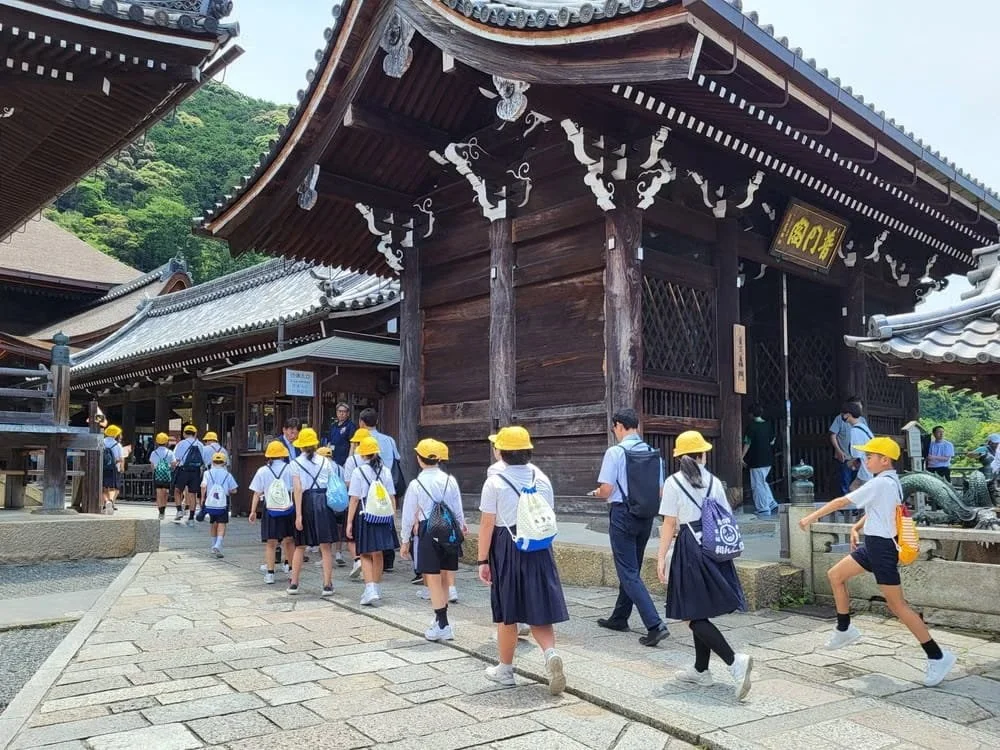
The Japanese school system follows a 6-3-3 structure: six years of elementary school, three years of junior high and three years of high school, with the first nine years compulsory. What sets it apart is less the structure than the school day itself. Students serve lunch to their classmates, clean their own classrooms, take turns managing classroom duties and spend their afternoons in clubs.
A school exchange visit lets students see all of this from the inside, usually in a single day. It is one of the most direct ways into daily life on school trips to Japan, and it reaches a side of the country that sightseeing rarely does. Below, we cover what to expect from a school exchange in Japan: how the school system is structured, how a typical exchange day runs, what surprises and challenges visiting students and how teachers can prepare their group.
How Is the Japanese School System Structured?
Japanese children spend 12 years in school before university, and the first nine are compulsory. The school year starts in April and ends in March, according to the Embassy of Japan in the United States.
| Stage | Ages | Length | Compulsory |
|---|---|---|---|
| Elementary school (shogakko) | 6 to 12 | 6 years | Yes |
| Junior high school (chugakko) | 12 to 15 | 3 years | Yes |
| High school (koko) | 15 to 18 | 3 years | No |
| University | 18 and up | 4 years | No |
Alongside academic subjects, the national curriculum includes what Japanese schools call special activities, or tokkatsu: classroom duties, school lunch, cleaning, student council and clubs. These are the parts of the day a visiting group actually sees, and they explain most of what surprises visitors.
What Happens During a School Exchange Visit in Japan?
A typical exchange day runs from a welcome ceremony through a shared class, lunch and clean-up, and an after-school club, before ending with photos and goodbyes. The afternoon is the part that varies most from school to school.
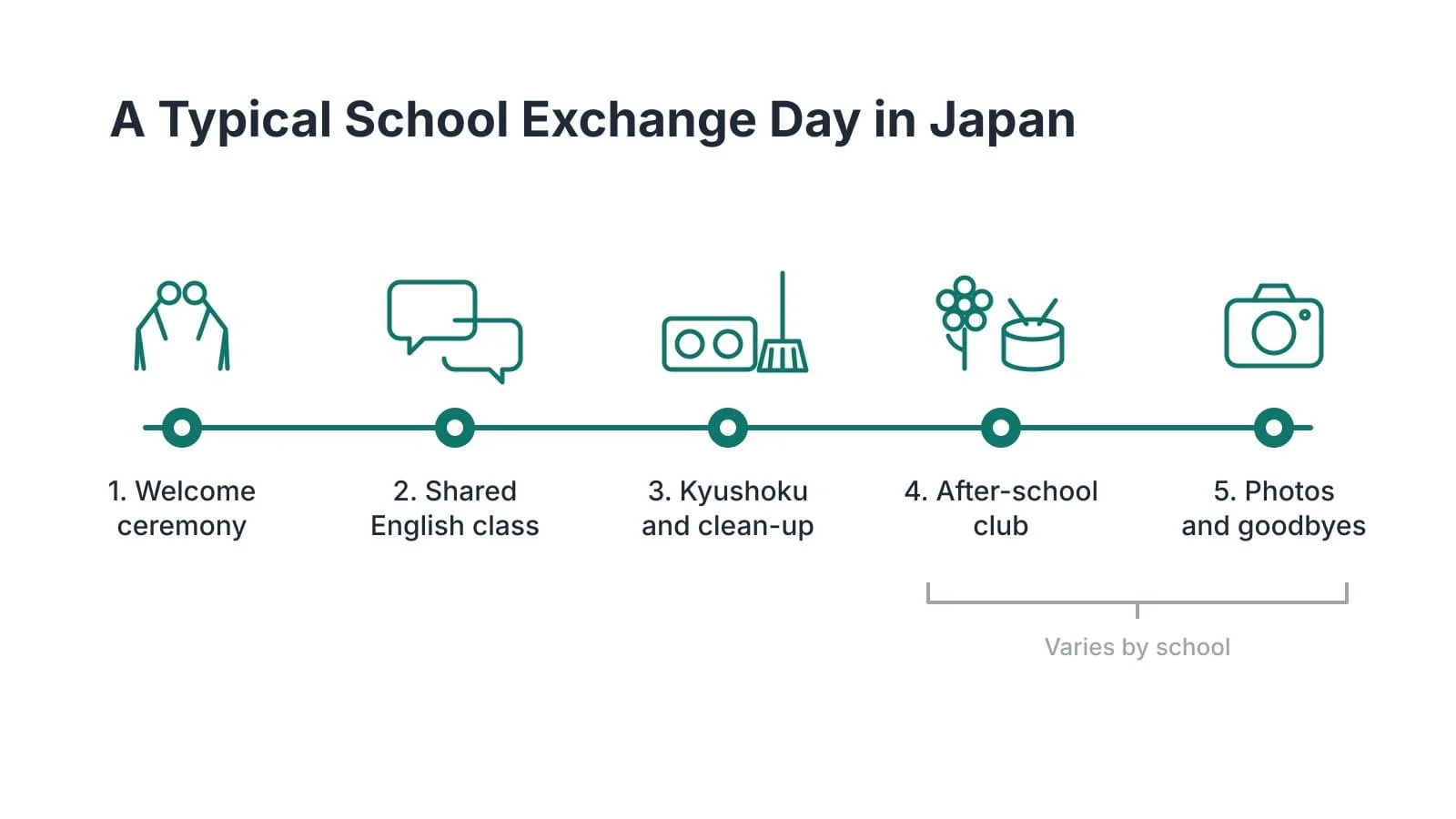
The five stages most exchange days follow; the afternoon varies most between schools.
Welcome ceremony. The host school opens the day with a ceremony to welcome the visiting group.
A shared class. Typically, this is the English class. Students from both schools practice introducing themselves and getting to know each other, which gives everyone a structured start before the more relaxed parts of the day.
Kyushoku, then clean-up. Lunch is kyushoku, a class lunch eaten together in the classroom rather than in a cafeteria. Students enjoy a meal together, and when the meal is over, the students clean up the classroom as a team.
An after-school club. This part varies between schools, but most often, the visitors join a club for the afternoon. Options range from dance and sports to culture clubs such as ikebana (flower arranging) or local theater like kagura, a traditional form of sacred music and dance.
Photos and goodbyes. The day ends with commemorative group photos and farewells, before the group heads back to its accommodation.
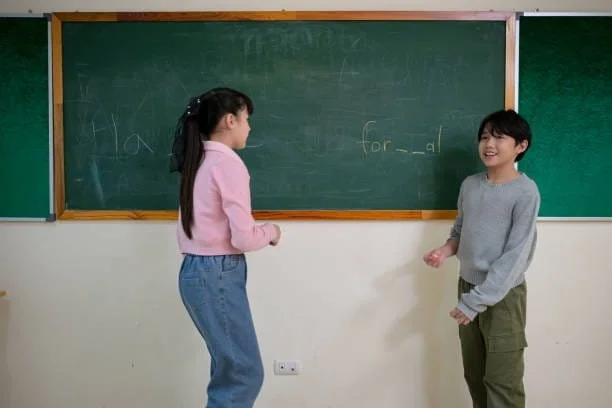
Self-introductions in the English class give both groups a structured start to the day.
What Surprises Visiting Students About Japanese Schools?
The biggest surprises about Japanese schools are usually not related to the schedule. They come from how much responsibility Japanese students carry, both inside school and on the way home.
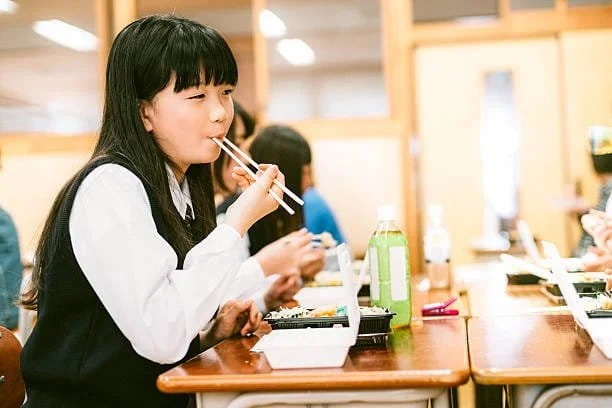
Kyushoku is eaten together in the classroom, not in a cafeteria.
Students Keep Their Own Classroom Clean
This is the surprise visitors mention most. Each class assigns rotating roles and responsibilities so its shared space stays clean and well kept. Japanese schools call these rotating classroom duties “toban katsudo”, and they cover cleaning, serving lunch and leading the class's daily routines, with every student taking a turn.
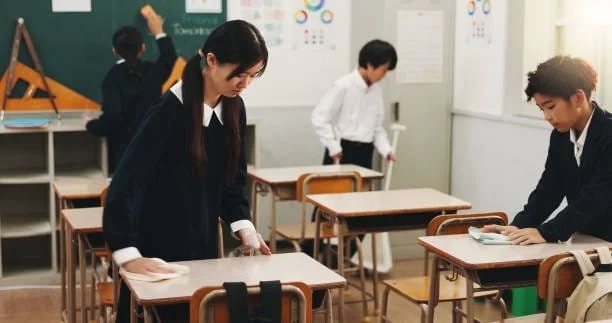
Cleaning roles rotate, so every student takes a turn.
Teachers Come to the Class, Not the Other Way Around
Visiting students are often used to moving between rooms for each subject. In Japan, the class stays in its own room and the teachers come to them, apart from specialist rooms such as science labs or the gym.
Young Children Walk Home Without Their Parents
Some visitors are surprised by how young the elementary students walking home on their own are. That independence has a lot of support behind it. Local community volunteers and the PTA staff the streets around the school so children get to and from home safely, and many schools also set routes and have children walk in neighborhood groups, part of an organized network of routes and volunteers behind the school commute.
What Do Visiting Students Find Hardest?
The language barrier is one challenge that students mention. It is the most common difficulty on an exchange day, and younger students feel it more.
Younger students often don't yet know to slow down or keep their language simple, so they try to push a conversation through by force. Teachers and other adults guide the group by rephrasing, lending a hand where they can and sometimes translating a harder idea so the conversation can carry on.
Those stalled moments are part of the exchange, not a failure of it. We look at why in our piece on how cultural immersion builds confidence abroad.
Which Part of the Day Leaves the Strongest Impression?
This is rarely just one single moment. What stays with students is the build-up of many small interactions over the day: an introduction in the English class, a shared lunch, a job done together at clean-up time.
If we had to pick one part, it would be the after-school clubs. In our experience, they are the fastest way for Japanese students to share a piece of their culture and for visitors to experience it firsthand, whether that is ikebana, kagura, dance or a sport.
That kind of hands-on cultural exchange is a big part of why Japan suits school groups so well.
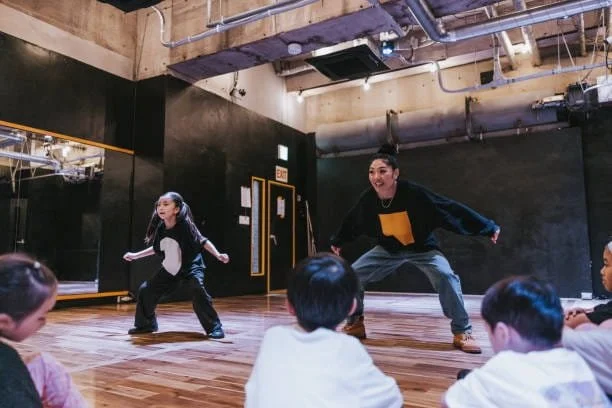
Clubs give host students a hands-on way to share their culture.
How Can Teachers Prepare Students for a Japanese School Exchange?
A little preparation helps students take part in the day rather than watch it.
Rehearse a short self-introduction in English for the shared class.
Practice speaking slowly, in short sentences, and using gestures when words run out.
Explain that lunch is eaten in the classroom and that the class cleans up together afterward.
Agree on a reflection question before the visit, then return to it with structured reflection after the trip.
A school exchange can be built into a Japan program alongside the rest of your itinerary, and the team at Beyond Classrooms can help you plan one around your students' age group and learning goals. Get in touch to arrange this kind of exchange for your students.