
Step into Rome's History, Taiwan's Classrooms, and Korea's Boardrooms

May is peak season. Schools are wrapping up, students are restless, and the programs are already underway. For us, it's the time of year when everything we've spent months designing finally comes to life in the field.
In Italy, Taiwan, and Korea, students stepped into medieval pathways, cultural traditions, and business ecosystems. They questioned what they saw, connected ideas across contexts, and came home with perspectives shaped by experiences.
Meanwhile, Earth Day reminded us how much impact students can create when programs are designed with intention. And at a conference stage in Kuala Lumpur, educators came together to build the future of experiential education.
Read on to see what it looks like when learning leaves a mark.
Medieval Pathways: What Ancient Rome Teaches Students About the World Today
Some classrooms have been standing for over 2,000 years. Inside them, the rise and fall of civilizations is written into every stone.
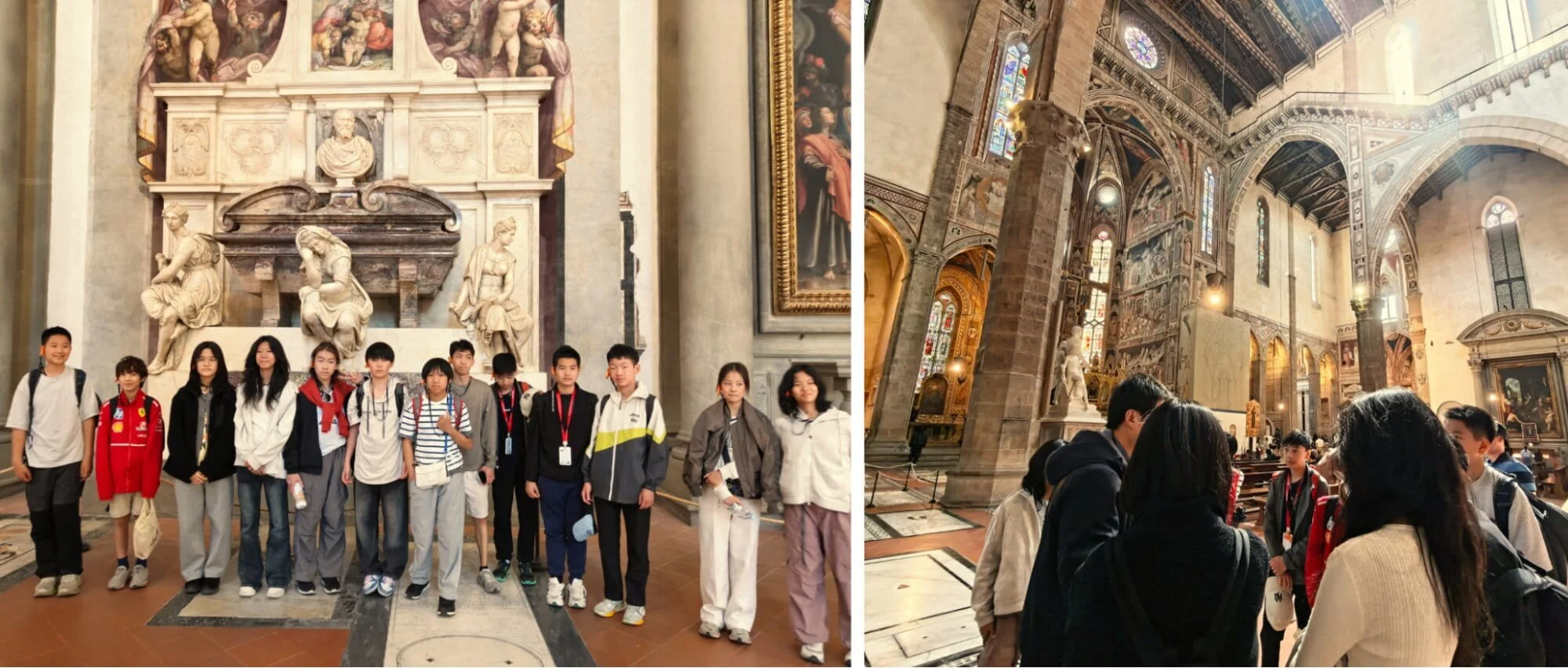
Italy is home to the world's oldest bank, founded in 1472 and still operating today. For a group of middle schoolers, walking through its doors wasn't a history lesson. It was a conversation about what makes institutions endure and whether systems built centuries ago still shape the world today.
That curiosity followed them through nine days in Rome, Siena, and Florence. Ancient political spaces raised questions about power and relevance. Renaissance masterworks became things to interrogate: who commissioned these works, whose stories did they tell, and who got left out? Each evening, students reflected on the day, and some of those thoughts ended up on postcards sent home.
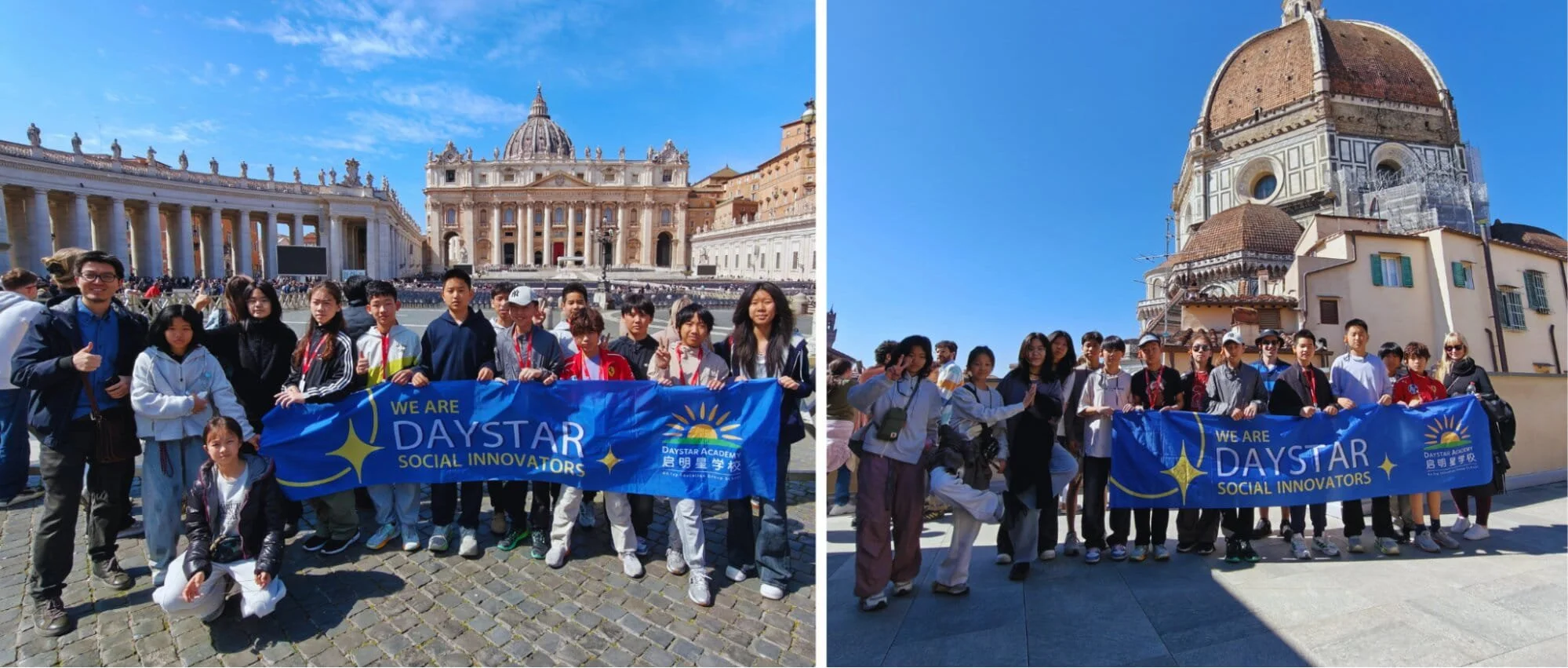
By the end, students weren't just recalling what they'd seen. They were interpreting it, asking sharper questions, and engaging with the world in a more thoughtful way.
Taiwan Explorer: Where Tradition and Modernity Tell the Same Story
In Taiwan, the past and present don't compete. They coexist, and students are invited into both.
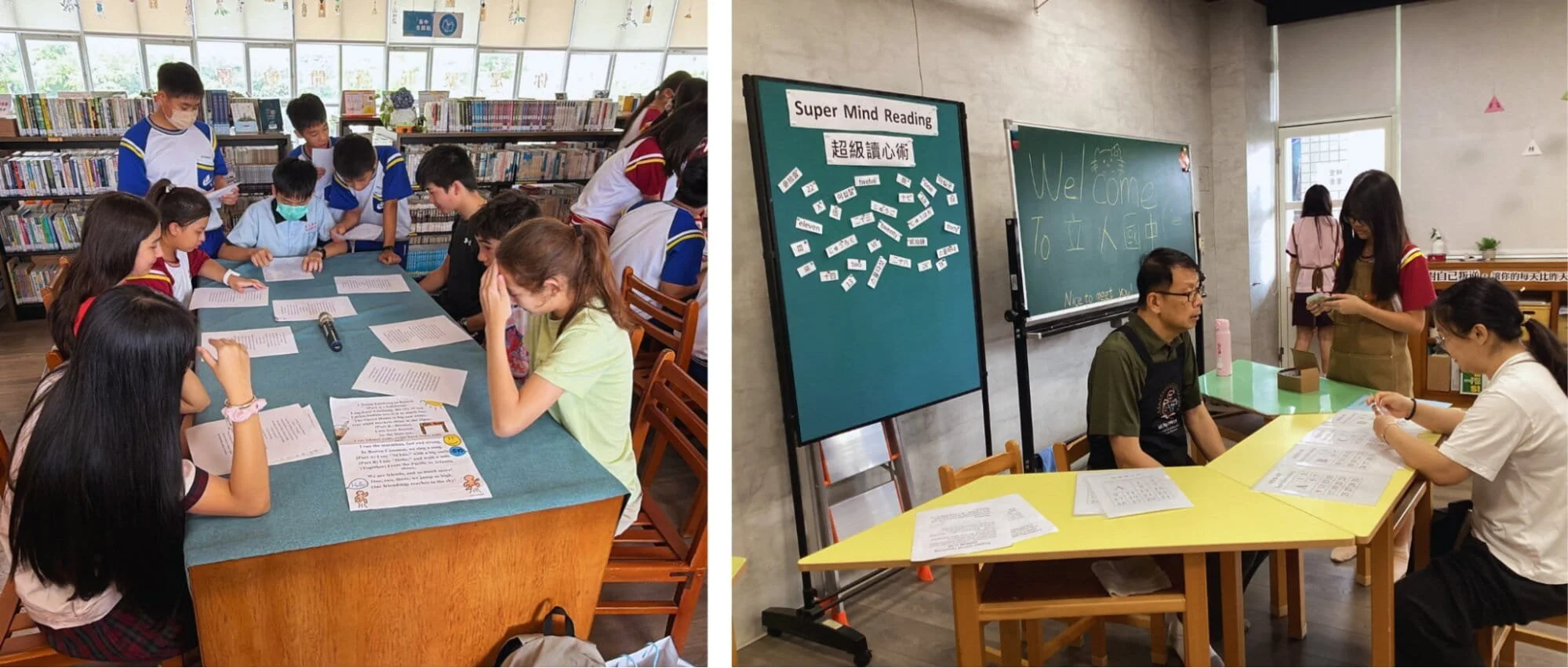
Students arrive expecting a modern city and find something richer: ancient temples beside innovation hubs, tea farms across mountain landscapes, and indigenous heritage woven into daily life.
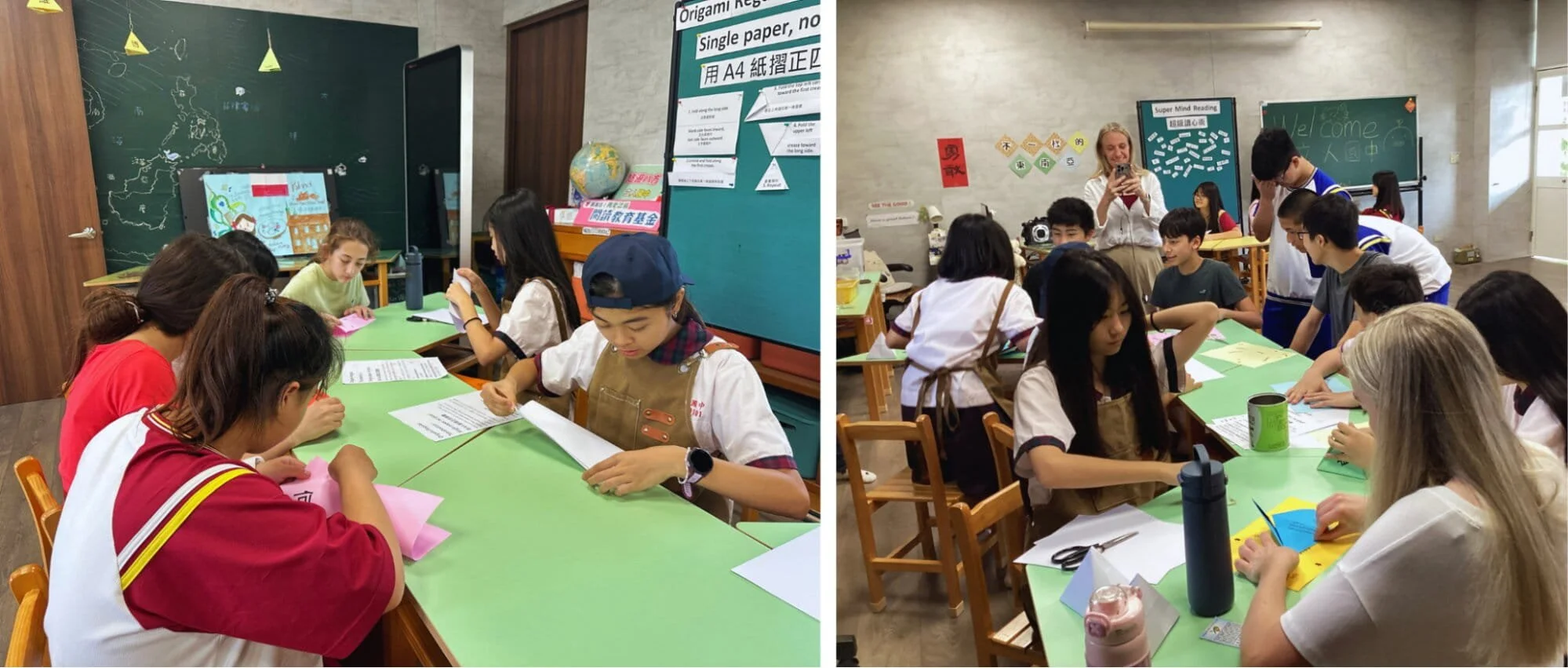
The journey through Taipei and Taichung was built around genuine connection rather than sightseeing. Mandarin practice happened in real conversations with local families. Traditional crafts, cooking, and gold panning were learned by doing, not by watching. And a homestay experience brought students closer to daily life in Taiwan than any guided tour could.
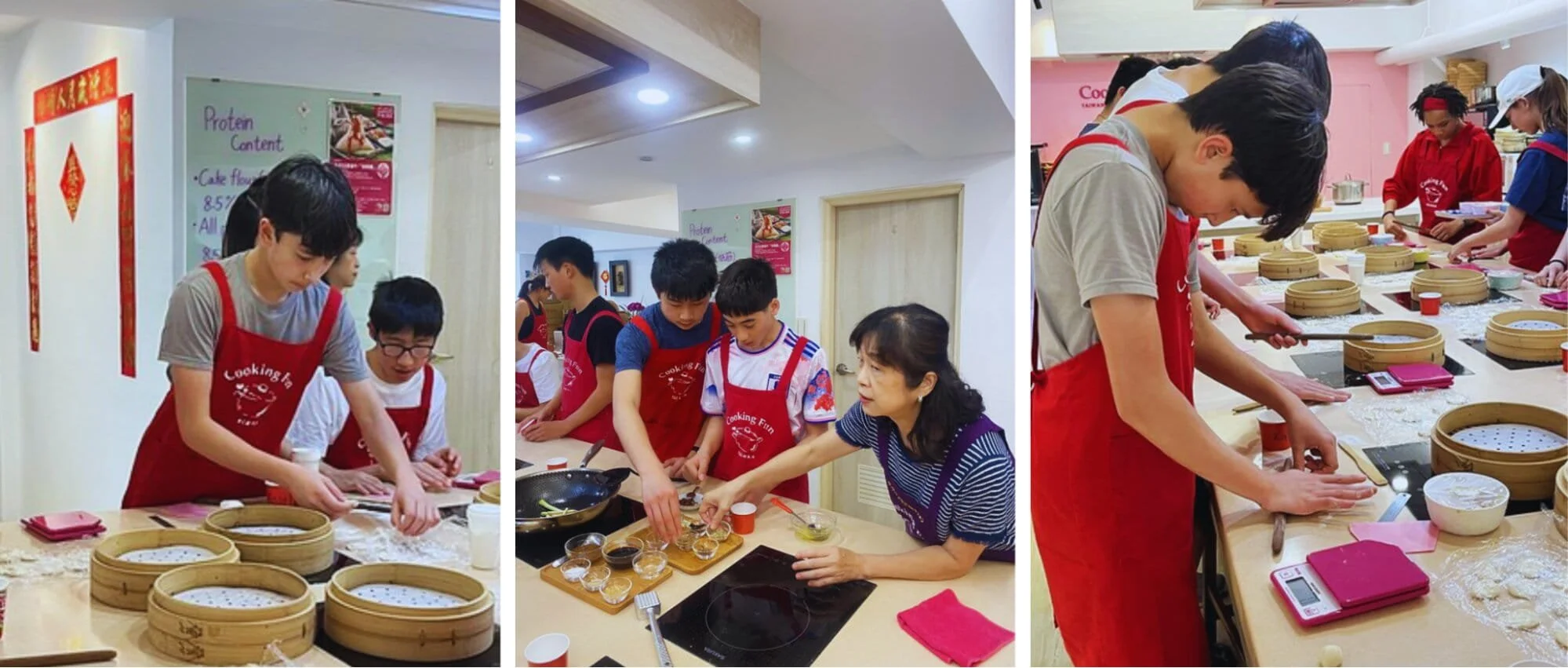
What Taiwan left them with was the understanding that a place can modernize without losing itself, and that tradition, when it's lived rather than preserved, has a quiet power all of its own.
Behind the Program: Helen Reflects on Leading MBA Students Through Korea
Let's hear our trip leader explain: what does experiential learning look like when the students are business leaders?
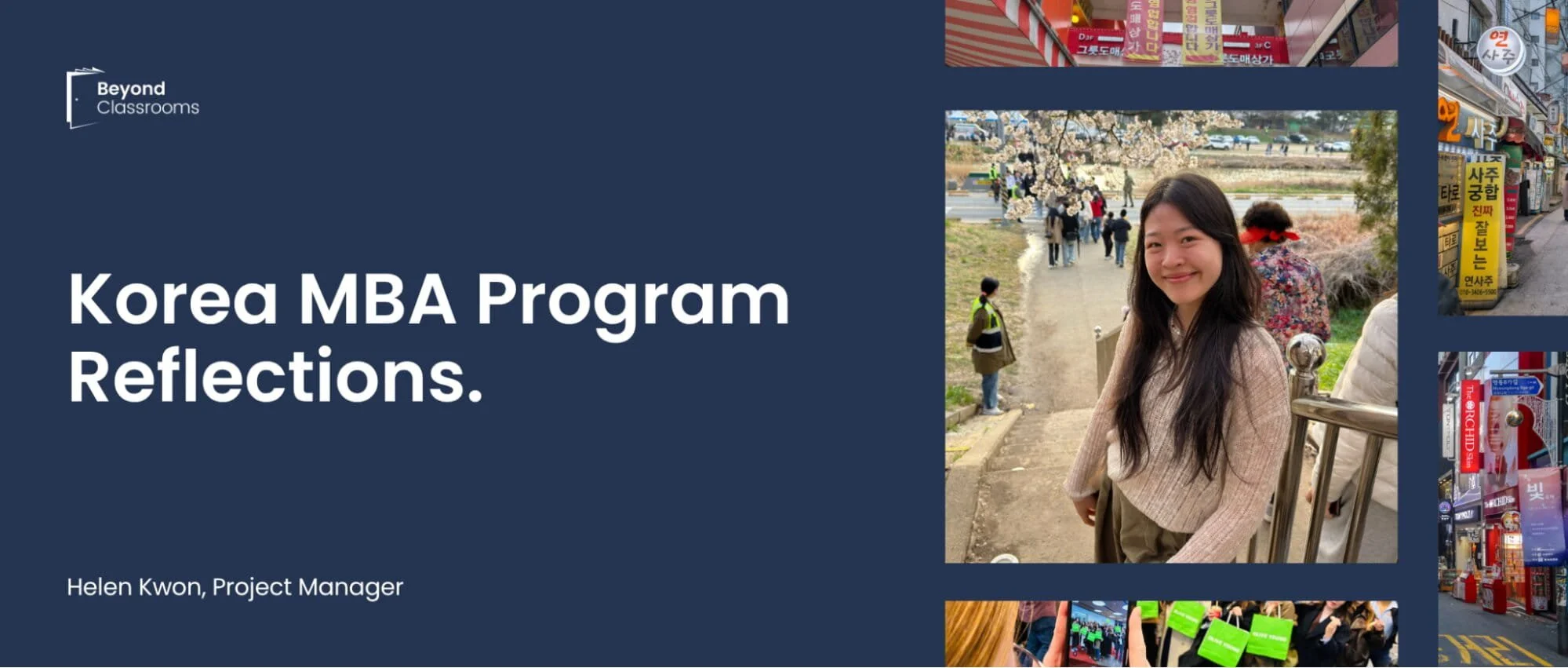
MBA students ask different kinds of questions. They think in frameworks, measure outcomes, and push back when something doesn't add up. So when Helen took a group of them through Korea, the program had to work harder than usual.
Her approach was straightforward: "The goal is for students not only to learn about Korea's business environment, but also to understand the cultural values and social dynamics that influence how business is done."
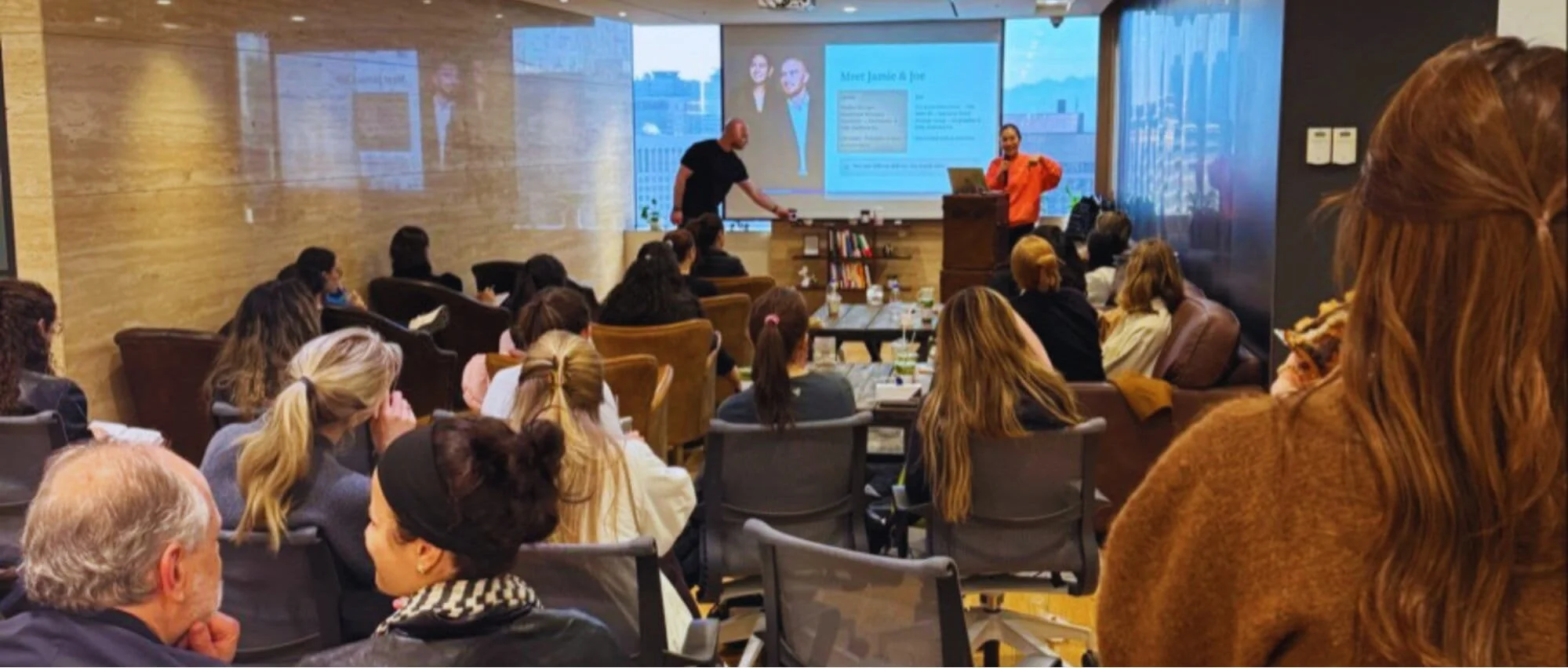
What she didn't expect was how naturally it all clicked. Students leaned in faster than anticipated, drawing connections between what they were seeing on the ground and the global business trends they had spent years studying. The conversations rarely stopped when the scheduled visits ended.
The moment that stayed with her most wasn't inside a boardroom. "One memorable moment was watching students continue conversations long after a company visit had officially ended. Seeing them connect classroom concepts to real conversations with local leaders made the experience feel especially meaningful."
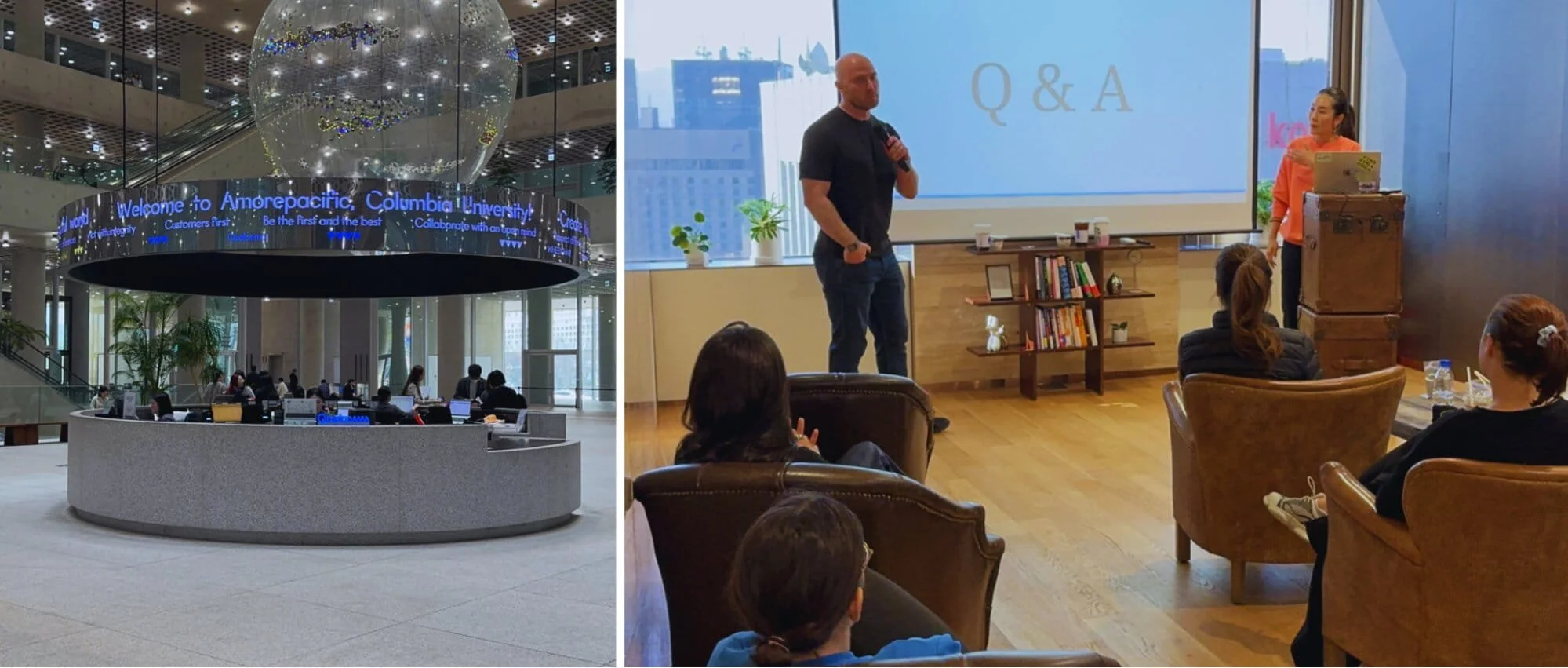
And that, for Helen, is the whole point. "Students gain a much deeper understanding when they can see, discuss, and experience ideas firsthand." Korea had a lot to teach. The students were ready to listen.
Earth Day: What Environmental Commitment Looks Like in Practice
For us, Earth Day is just another Wednesday.
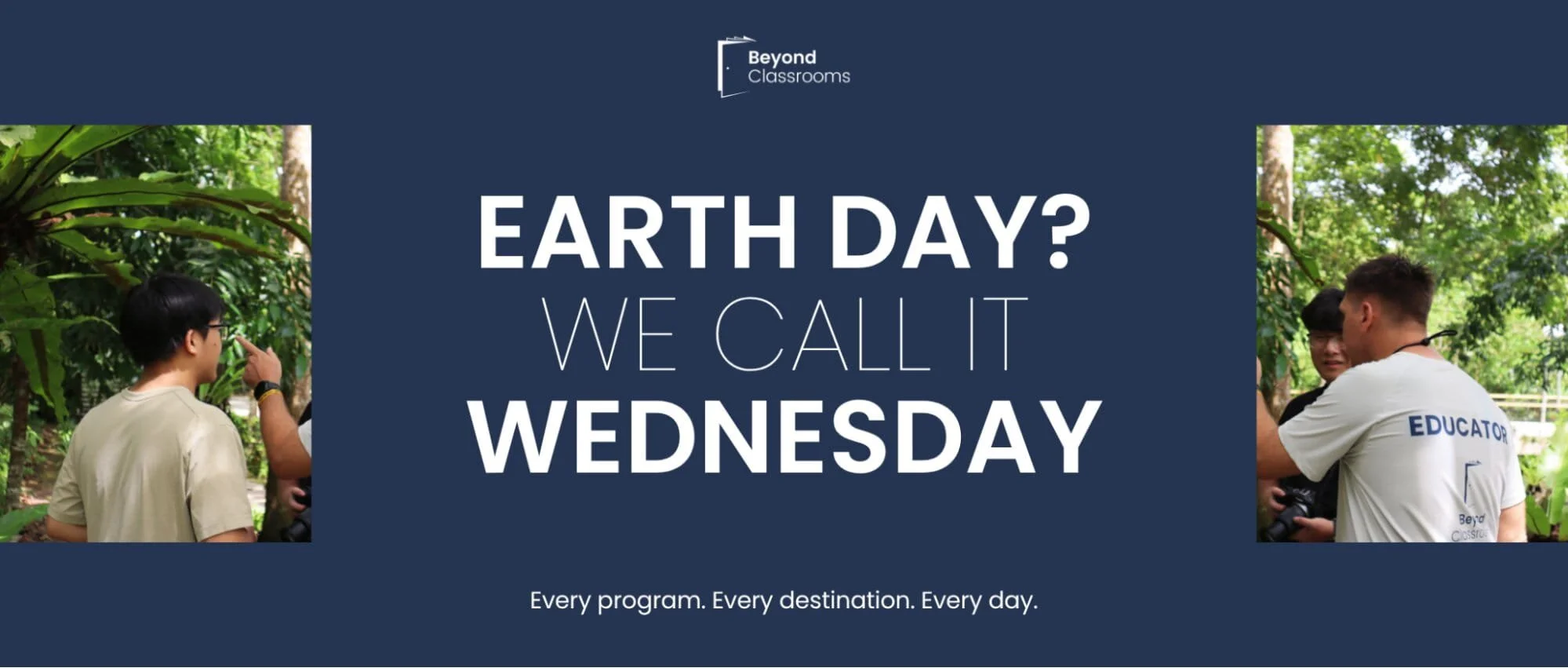
Environmental commitment isn't something we save for one day a year. It runs through every destination we choose, every activity we design, and every community we work alongside. So this Earth Day, instead of making promises, we're sharing what the work actually looks like in practice.
The numbers tell the story better than we can: 300 hours of coastal cleanup in Jeju. 500 trees planted in Borneo's rainforests. 2 solar lighting systems installed in Mai Chau. 90 kg of ocean debris that didn't end up back in the sea, it became art. And one empty classroom in Thailand that 50 local students now call a library.
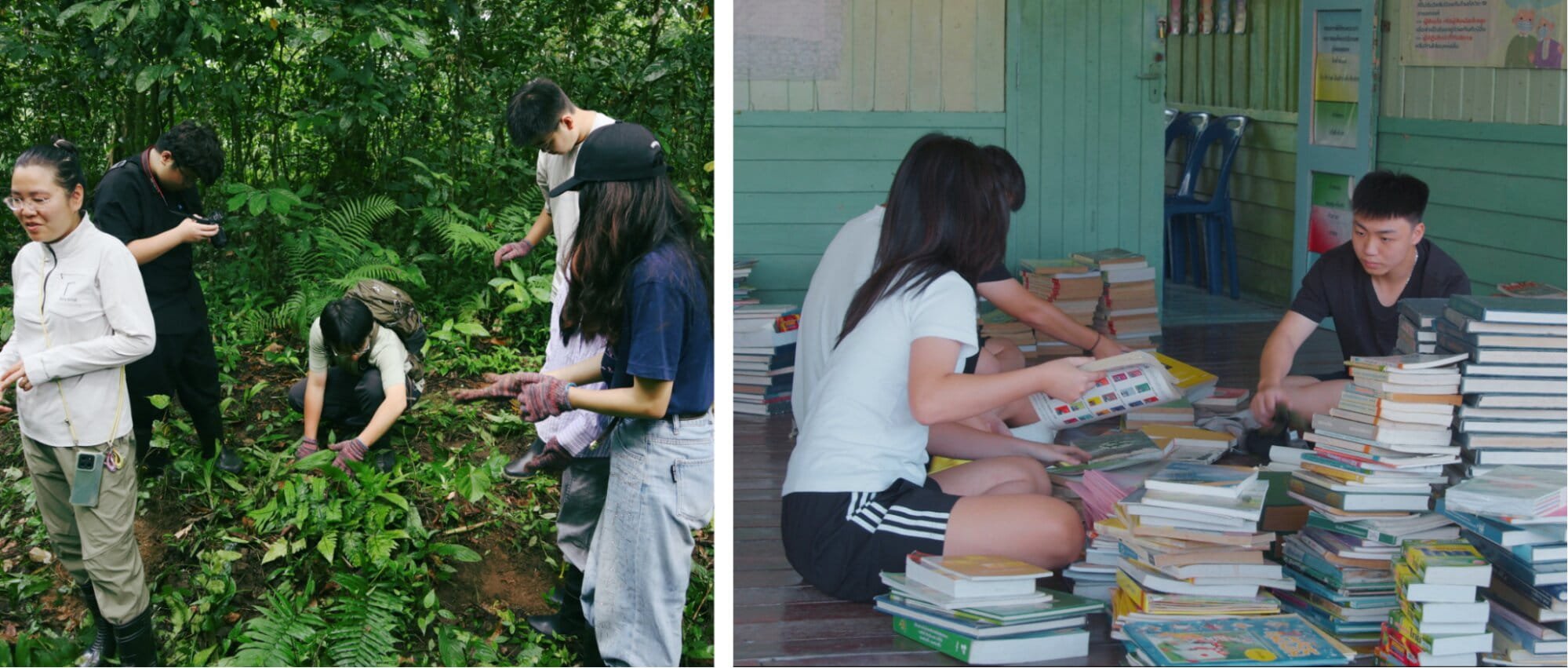
Behind every number is a group of students who showed up, got their hands dirty, and left a place better than they found it. Environmental commitment isn't built in a day. It's built through experience, reflection, and young people who already understand they're part of the solution.
OFFSEAS 2026: Building the Future of Experiential Learning Together
The best ideas in education are never built alone.
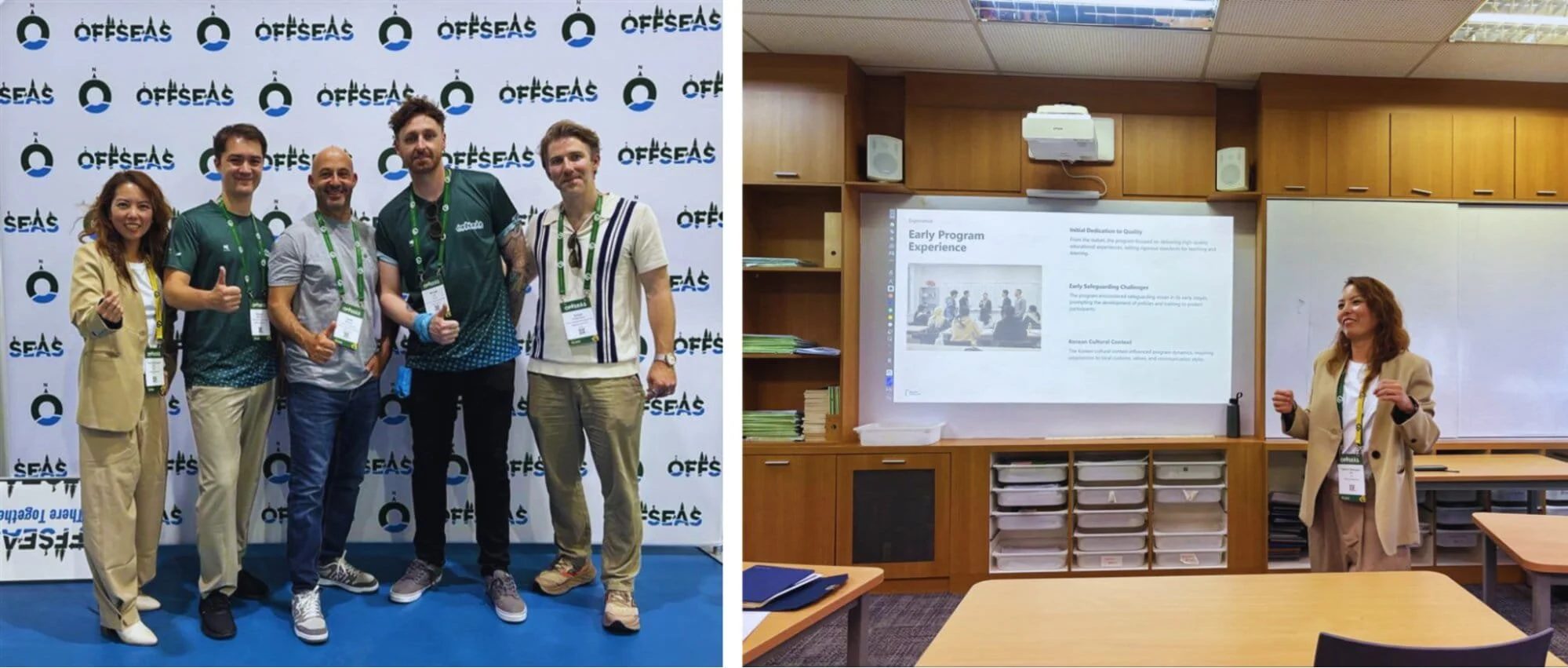
Our team recently joined educators, school leaders, and changemakers at OFFSEAS 2026 in Kuala Lumpur. This year's theme, "Out There Together: Building Sustainable Programs For All," felt less like a conference topic and more like a description of the work we do every day. Haena, our CEO, took the stage as a guest speaker, sharing what it truly takes to design programs that leave a lasting impact on students.
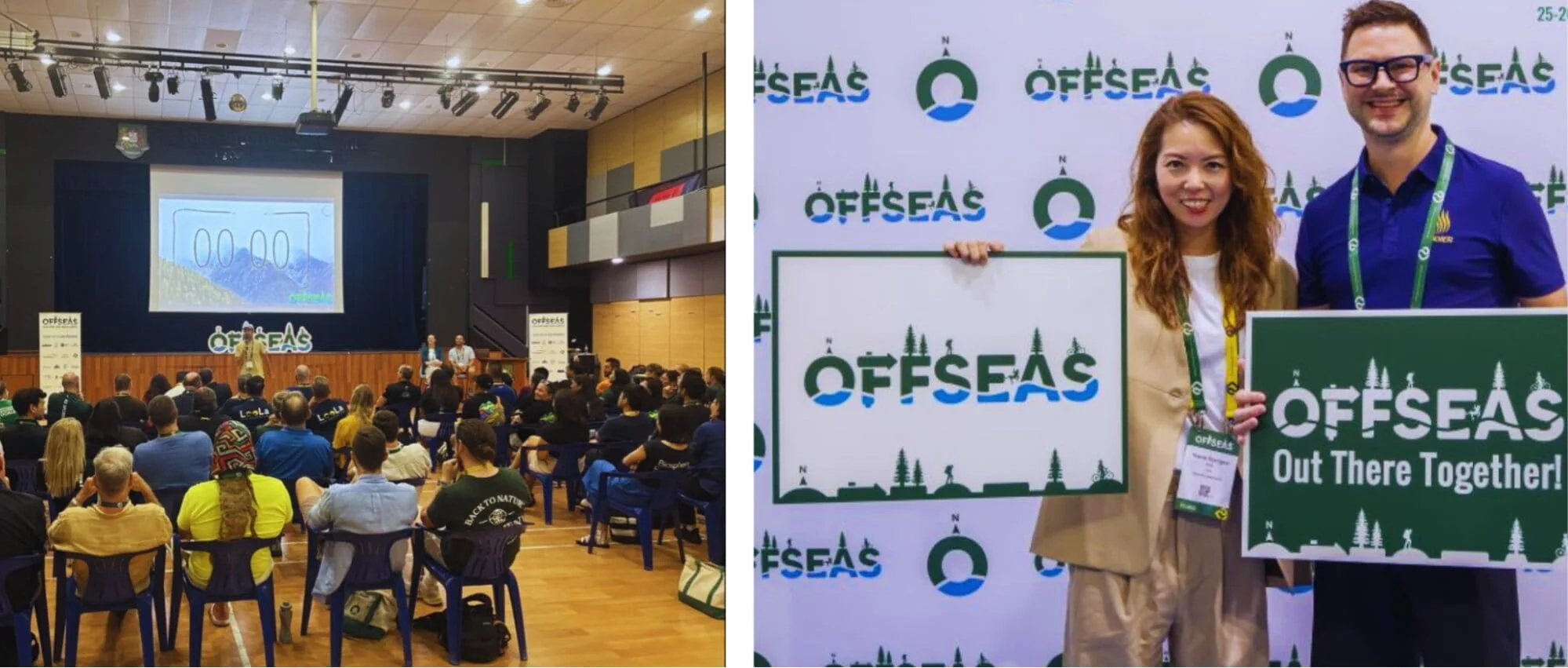
OFFSEAS is more than a conference. It's where the people who care most about experiential education come together to ask harder questions and build something better. We left Kuala Lumpur energized and already looking forward to what comes next.
Every mark begins with a decision to go deeper, into a place, a community, a conversation, a question that doesn't have an easy answer. That's what we design for at Beyond Classrooms, and it's what stays with students, educators, and communities long after the program ends.
Reach out to our team, and let's start designing a program that leaves a mark worth making.