

When Is the Best Time to Take a School Trip to Vietnam?

With more than 1,000 miles of coastline stretching from north to south, Vietnam offers opportunities for school groups to travel and learn throughout the year. The country's varied geography and weather patterns mean there are good options in different regions across different seasons, whether a program focuses on Hanoi and Mai Chau, the central coast, or the Mekong Delta.
Generally speaking, September to November and February to April offer some of the most favorable conditions across multiple regions, although the best timing will depend on the destinations included and the experiences you want students to have.
At Beyond Classrooms, every Vietnam program is built around a specific place and activity, whether that's village revitalization work in Mai Chau or kayaking the reservoir at Thac Ba. That means the best time to travel is a question of when a specific itinerary runs best, and how that lines up with your school's term dates. This guide breaks both down.
Why Vietnam Doesn't Have One "Best" Season
Vietnam runs roughly 1,650 kilometers from north to south, and that length puts the north, center, and south under different weather systems at the same time of year. Many travelers are surprised to learn that Vietnam experiences winter in the north while the south stays warm all year. A group flying into Hanoi in December and a group flying into Ho Chi Minh City the same week will pack for two different climates.
Typically, the country is divided into four seasonal periods. In the north, these range from a cool, misty season from December to March, a warm and clearer period from April to June, a hot, humid, and rainy season from June to August, and a cooler, drier window from September to November. Central Vietnam runs on a separate clock again: its rainy and dry seasons don't line up with the north or south, with the wettest stretch falling in winter rather than summer. Meanwhile, the south holds a tropical monsoon climate with high temperatures year-round and just two seasons: rainy from May to November and dry from December to April.
Best Time to Visit Northern Vietnam (Hanoi, Ha Long Bay, Mai Chau)
The best months for northern Vietnam are September to November and March to April, when the region sits between its cold winter and its hot, wet summer. Outside that window, groups either bundle up against a damp, cool December to February, or work around heavy rain and high humidity from May to August.
The Mai Chau Village Revitalization program has students working alongside the local community on hands-on service projects, which is far more comfortable and practical outside the peak heat and rain of summer. The same applies to Expedition Kayaking in Thac Ba, where the transition from the hotter, wetter summer months to cooler and drier conditions can make a noticeable difference to water activities and paddling comfort.
Northern Vietnam's far north and mountain areas, including Sapa, run colder than Hanoi itself, sometimes dropping close to freezing in January. For itineraries built around Hanoi, Ha Long Bay, or Mai Chau specifically, this has less impact, but it's worth flagging for any program that extends further into the highlands.

Beyond Classrooms during the Mai Chau service-learning program.
Best Time to Visit Central Vietnam (Hue, Hoi An, Phu Yen)
Central Vietnam runs on the opposite clock from the north. Its wet season falls in the winter months rather than the summer, generally September through December, with the heaviest rain and highest typhoon risk landing in October and November. February through August is the more reliable stretch of time to visit, and it lines up with a hot, dry summer that peaks in June through August.
Phu Yen, the setting for the Through the Lens of Phu Yen itinerary, sits on this central coastline. It's a province of steep mountains running down to fishing villages and lagoons, still largely untouched by mass tourism, which is part of what makes it valuable for a program built around documentary-style, place-based learning. For the best combination of weather and conditions for fieldwork, the program is generally best suited to run between February and June.
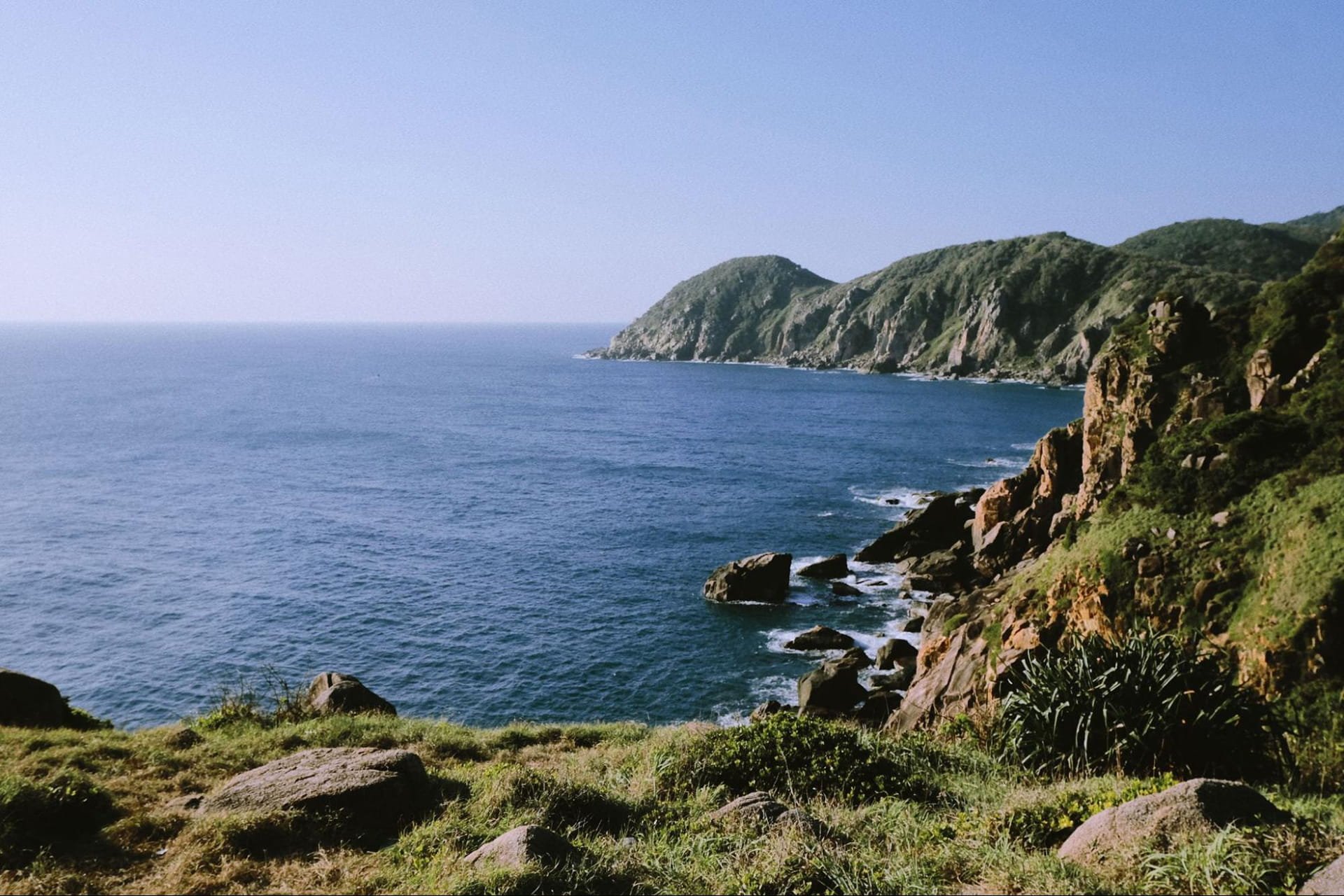
Students will experience daily life in Phu Yen's fishing villages during the Through the Lens of Phu Yen program.
Hue and Hoi An, further north along the same central coastline, follow a similar seasonal pattern to Phu Yen, although conditions can vary between destinations. Groups combining any of these central destinations with a northern or southern leg should account for the differences in weather between regions when deciding the order of the itinerary, rather than assuming one packing list and one set of expectations will cover the whole trip.
Best Time to Visit Southern Vietnam (Ho Chi Minh City, Mekong Delta)
The dry season, December to April, is the most reliable stretch for southern Vietnam, with consistent warmth and low rainfall throughout. But the wet season, May to November, is still workable for school groups. In Ho Chi Minh City, rain typically arrives as short, heavy afternoon showers rather than prolonged periods of rain, so groups can plan outdoor activities around the weather and build some flexibility into daily schedules.
This is useful for schools whose term dates only allow travel during the southern wet season since it's often the least disruptive of Vietnam's three regional "wet" seasons for a packed daily schedule. Temperatures stay warm and fairly consistent year-round, with the hottest stretch falling in April and May before the rains set in.
Beyond Classrooms' Vietnam Emerging Economies itinerary runs through this region, connecting students with Vietnam's rapid urban growth and its role as one of Southeast Asia's fastest-developing economies. Ho Chi Minh City and the surrounding Mekong Delta give students a direct, visible link between geography and economic development, from the river systems that support the region's agriculture to the pace of urbanization in the city itself. We generally recommend running this program between December and April, when the drier conditions make it easier to plan field visits and outdoor learning across Ho Chi Minh City and the Mekong Delta.

Beyond Classrooms students exploring the Mekong Delta's role in Vietnam's economy on the Vietnam Emerging Economies program.
Budgeting Around Seasonal Timing
Travel season affects cost, not just comfort. Flights and accommodation during peak travel windows in Vietnam, particularly around Tet (Lunar New Year, typically late January to mid-February) and the Northern Hemisphere summer holidays, tend to run higher than shoulder-season pricing. For a group booking, that difference multiplies quickly across flights, accommodation, and in-country transport.
This is one more reason timing decisions shouldn't be made on weather alone. A school with flexible term dates might find that traveling just before or after a peak window keeps favorable weather while avoiding the highest costs. For a full breakdown of what goes into an international school trip budget, from program fees to the costs families often overlook, see Budgeting for School Trips Abroad.
Choosing Your Vietnam Travel Window
If your school has flexibility in when it travels, September to November and February to April give the most reliable weather across the widest range of our Vietnam itineraries, from Mai Chau and Thac Ba in the north to Phu Yen on the central coast and the Emerging Economies program in the south.

Every Beyond Classrooms Vietnam itinerary is built around your school's dates, curriculum, and student age range.
If your school's travel dates are fixed by the academic calendar, the region is more important than the calendar month. A June trip that would be uncomfortable in northern Vietnam's hot, wet summer weather might work better with a southern itinerary, where afternoon showers rarely disrupt a full day of programming.
All our itineraries start with a conversation about your school's learning objectives, student age range, and travel dates, and the program is built around what actually works for your group rather than a fixed template. Contact Beyond Classrooms to start planning a Vietnam school trip around the dates that work for your school.