

Service Learning Examples: Real Projects for Student Trips
Many schools talk about service as part of an overseas trip, but it can be hard to picture what it actually looks like on the ground. What does a group of students do all week? Who decides? And how do you know the community benefits as much as the students do?
The six service learning examples below come from our own student trips in Vietnam, Thailand, Malaysia, China and Japan. For each one, we describe the community need, what students did, and how the project stayed reciprocal. That last part is what coordinators ask us about most, because the difference between service learning and voluntourism often comes down to two simple questions: who decided what the community needed, and did the community receive something it asked for?
What Makes Service Learning Reciprocal?
Service learning is reciprocal when the local community partner shapes the work and benefits from it, and students learn from the community rather than only about it. The National Youth Leadership Council’s K-12 Service-Learning Standards treat mutually beneficial partnerships as a mark of quality and warn against one-sided relationships.
We apply three tests to every program, and they are the same tests used on each example below:
The partner or community named the need.
The partner wants the work and can keep it going after students leave.
Knowledge flows both ways: students learn skills or perspectives from local people, not just facts about them.
These tests shape how we design every program.
Six Service Learning Examples From Our Student Trips
| Program | Location | Community Need |
|---|---|---|
| Vietnam Village Voices | Mai Chau, Vietnam | Village infrastructure |
| Creating Spaces, Creating Smiles | Hanoi, Vietnam | Safe, creative play spaces |
| Service on the Soils of Saraburi | Saraburi, Thailand | Seasonal farm work |
| Guardians of Borneo | Sabah, Malaysia | Wildlife recovery, plastic waste |
| Marine Life Conservation | Huizhou, China | Turtle care, beach pollution |
| Blue Zones, Conservation and Culture | Okinawa, Japan | Coral reef recovery |
Vietnam Village Voices, Mai Chau
Community need: Figures from the Mai Chau District Authority, cited on our program page, show that over 30% of households in the village are classed as poor. Villagers and community leaders chose infrastructure as the priority.
What students did: After a hike to Na Chao Village for a project orientation, students spent three days on a construction project alongside villagers. They stayed in local homestays, joined a basket-weaving workshop, and ended with a cultural exchange evening.
How it stayed reciprocal: The project list comes from the village, not from us, and homestay nights put income directly into local households. Schools can also add the Diploma in International Volunteering, which frames the work with pre-departure learning and post-project reflection to deepen learning and impact. See the full service learning trip to Vietnam.

Students and villagers working together on the Mai Chau project.
Creating Spaces, Creating Smiles, Hanoi
Community need: Many of Hanoi’s densely built neighborhoods have few safe places for children to play. Think Playground, a Hanoi-based social enterprise, designs and builds play spaces with local communities.
What students did: Over two days with Think Playground, students helped design, paint and build ground elements, and renovate existing playgrounds while learning why play matters for child development.
How it stayed reciprocal: Think Playground owns each project from design to maintenance. Students add hands to work already planned, so nothing is left half-built when they fly home. Later in the Creating Spaces, Creating Smiles program, students take part in conservation efforts and observe rescued bears at the Four Paws sanctuary in Ninh Binh.

Repairing lay equipment with Think Playground in Hanoi.
Service on the Soils of Saraburi, Thailand
Community need: Small farms around Saraburi, two hours from Bangkok, depend on extra hands at key points in the farming year.
What students did: Students began with a village introduction, hearing from villagers about daily life and the difficulties they face. They then spent two days on farm work, with tasks set by the farmers according to the season. Villagers taught them bamboo weaving and rice ceremonial traditions, and showed them how rice is pounded, winnowed and milled by hand. Lunch was a farmer’s meal wrapped in a banana leaf.
How it stayed reciprocal: Farmers decide the tasks, so students do what the season needs rather than a job invented for visitors, and villagers are the teachers for the traditional skills. The final reflection is held with the community.

Rice harvesting in Saraburi, where farmers set the day’s tasks.
Guardians of Borneo, Sabah
Community need: Sabah’s rainforest wildlife depends on rehabilitation work and habitat restoration, while local communities deal with growing plastic waste.
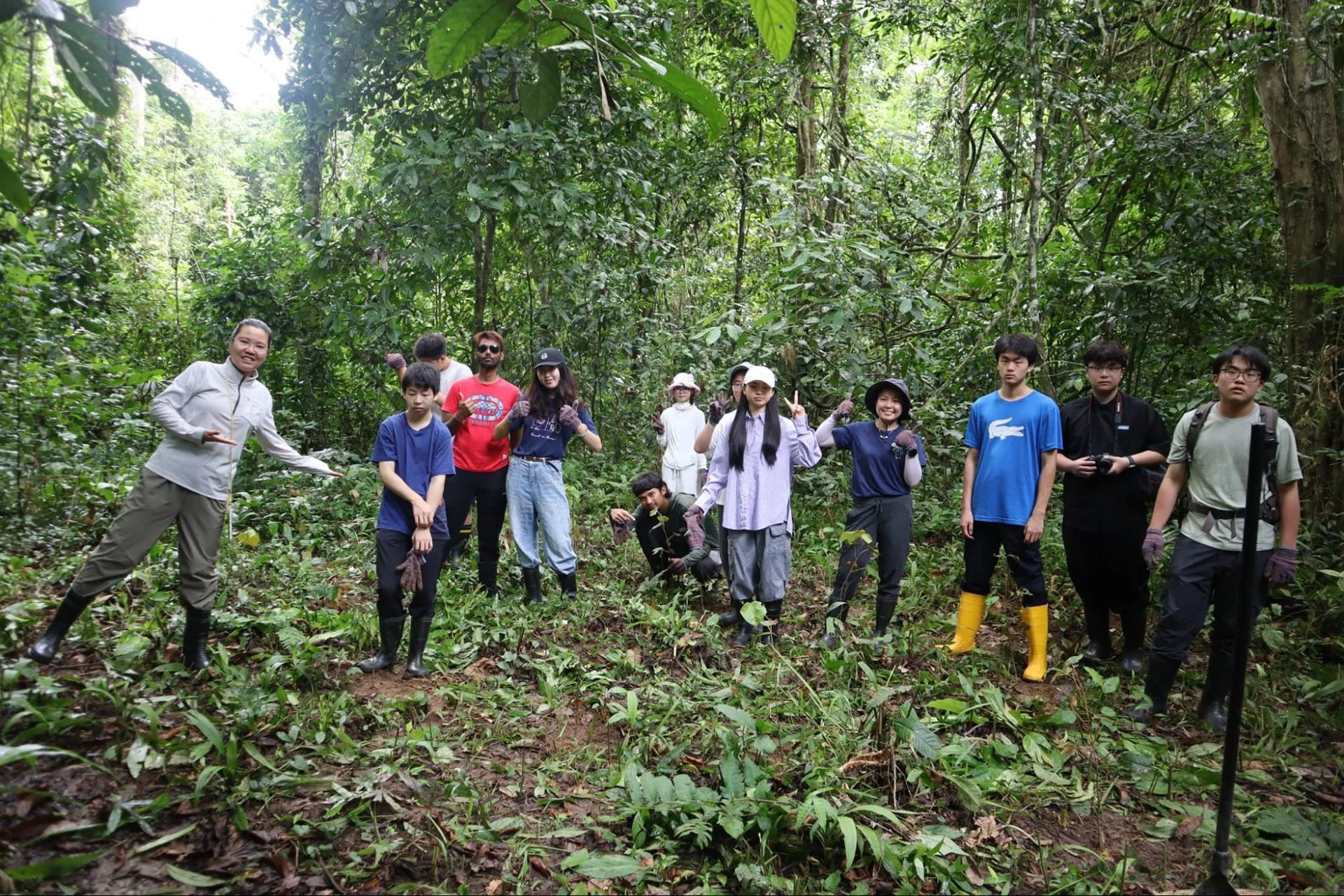
What students did: Students joined a community clean-up, turned plastic waste into pendants at the Precious Plastic recycling center, and prepared food enrichment for sun bears at a rehabilitation center. They also heard from a local NGO conservation specialist and planted trees along the Kinabatangan River, filming it all for a reflection vlog.
How it stayed reciprocal: Students prepare enrichment and never handle the bears. Local experts, not our trip leaders, explain the threats to the ecosystem, and tree planting takes place on sites chosen by our planting partner.
Marine Life Conservation, Huizhou
This program, run by our sister organization WildChina Education for students. At the Run by our sister organization WildChina Education, this program works with the Huizhou Sea Turtle Rescue Center.
Community need: Rescued turtles need clean pools to recover in, and nesting turtles need beaches free of rubbish.
What students did: At the rescue center, students scrubbed algae from the recovery pools. During nesting season, they cleared a beach and filled 20 large bags with waste, including a plastic barrel.
How it stayed reciprocal: Rescue center staff set the tasks, so students worked on what the center needed rather than what looked good for a photo. The beach clean-up also protects the nesting grounds the turtles rely on. See the Marine Life Conservation program in Huizhou.
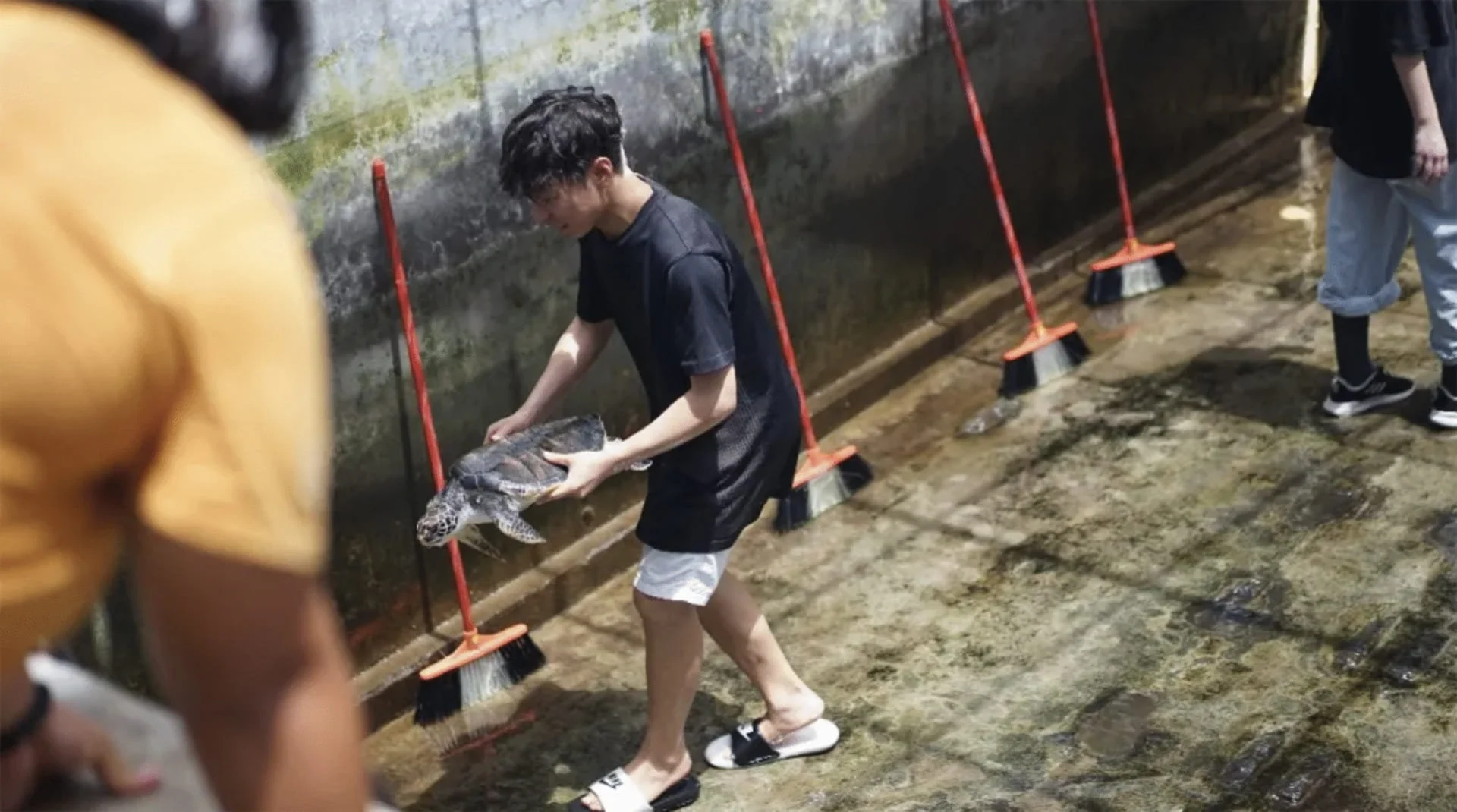
Cleaning up after rubbish collection during turtle nesting season.
Blue Zones, Conservation and Culture, Okinawa
The Blue Zones program mixes service with cultural learning, so only part of it is service.
Community need: Okinawa's coral reefs need help to recover, and local conservation teams use coral nurseries to do it. Mangrove ecosystems also need field research to be understood and protected.
What students did: Students learned how local conservation teams use coral nurseries to help reefs recover and took part in one restoration session. They then spent a day on mangrove field research. The rest of the program is cultural: an Okinawan cooking class and a shisa painting workshop. More options are on our school trips to Japan page.
How it stayed reciprocal: The conservation work belongs to the local teams, and students learn directly from them how nursery restoration works. The service component is a single restoration session within a cultural program, so we describe it as service-informed rather than service-led.

Restoration work with local conservation teams in Okinawa.
Where Service Learning Tips Into Voluntourism
Service learning becomes voluntourism when a trip is designed around what visitors want to do rather than what the community needs. Three warning signs come up again and again.
Construction that local builders could be paid to do. If unskilled students build something that a professional later has to redo, the community loses out twice.
Touching wild animals. World Animal Protection advises travelers to choose venues that don’t allow direct contact such as touching, feeding or posing with animals.
Visits to orphanages. Research collected by the Better Care Network links orphanage tourism and volunteering with harm to children, including trafficking. For this reason, we rarely work with orphanages. We always make sure any work we do with children and local communities is done safely and ethically, protecting children.
Every program goes through our safety and risk assessment process, and structured post-program reflection helps students question their own role.
Questions to Ask Before Booking a Service Learning Trip
Whichever provider you work with, these six questions separate service learning from sightseeing with a work session attached:
Who identified the need, and can the provider name the partner?
What happens to the project after students leave?
Does the work displace paid local workers?
Does any activity involve touching wild animals or visiting children in care?
How much of the program is service, and how much is learning or sightseeing?
What will students learn from the community, not just about it?
To plan a service learning trip where the community sets the brief, talk to our team at Beyond Classrooms to get started.